

A slime kit can turn a simple craft sale into a first business lesson. I see the main point like this: kids learn planning, pricing, selling, and problem-solving faster when they have a small product people already want to buy. With slime priced at $5 to $10 per jar, even 20 jars at $7 can bring in $140 in revenue.
Here’s the short version:
- I can use slime to teach kids how to set a goal
- I can show them how to price 20 jars against a sales target like $100
- I can help them make a table look better with names, flyers, and add-ons
- I can give them a simple way to talk to customers
- I can track what sold and use that to decide what to make next
What stands out to me is how the kit turns early problems into small tasks. Instead of guessing, kids can count inventory, test prices, watch which colors sell first, and write down customer comments. That makes business ideas easier to learn because each sale gives a clear result.
If I were explaining it to a parent in one line, I’d say this: a slime kit helps kids practice money skills, sales talk, and decision-making in one afternoon.
11-year-old entrepreneur starts his own business selling slime
The Business Challenges Kids Run Into First
Most kids start selling with plenty of energy but not much structure. So the first mistakes tend to show up fast. And that’s exactly where a slime business kit helps most.
Starting Without a Plan or a Pricing System
A child makes slime, picks a price, and heads to a sale without a goal, an inventory count, or a sales target. If jars sell out too fast - or barely move - there’s no baseline to measure against.
Pricing can be just as tricky. Kids often go with gut feel. That can lead to prices that are too low to make enough money or too high for the crowd. Then, when sales are slow, they can’t tell what went wrong.
Looking Like Every Other Table at a Sale
A plain table with no signs, no product names, and no theme gives shoppers no reason to stop. If several kids are selling slime, the table with a branded tablecloth, labeled jars, and a flyer is more likely to get attention.
A name like "Blue Glitter Cloud" sparks curiosity. "blue slime" doesn’t.
Talking to Customers and Handling Feedback
Talking to customers takes practice. So does answering questions and staying calm after a "no thanks." A child who looks unsure - or says nothing while people browse - is less likely to make a sale than one who can share a few clear words about what they’re selling.
Feedback can be hard too. Maybe someone asks why the price is higher. Maybe they walk away without buying. If a child isn’t ready for that, it can feel personal. Instead of feeling proud, they end up feeling discouraged.
That’s where the kit helps: it turns each challenge into a simple next step.
How a Slime Kit Helps Kids Solve Each Challenge
The kit breaks three early business hurdles - planning, visibility, and customer talk - into simple tasks kids can handle on their own.
Turning Goals, Inventory, and Prices Into a Simple Plan
The $39.95 Starter Kit comes with 20 pre-made slimes, so a $100 sales goal is easy to map out: 20 jars at $5 each. That gives kids a clear target from the start.
The sales tracker makes the plan feel concrete. After each sale, kids can mark what sold, see how close they are to their goal, and spot which slimes moved fastest. From there, they can tweak prices or change inventory based on what happened at the table.
Once the plan is in place, the next hurdle is getting noticed.
Using Decorations and Flyers to Stand Out
The kit includes rainbow glitter, charms, beads, and glow powder, which lets kids make themed slimes that catch the eye. A name like "Galaxy Glow" or "Birthday Confetti" gives shoppers a small reason to pause and take a look.
It also comes with 10 promotional flyers and 20 thank you cards. The flyers help kids show product names, prices, and short descriptions at a glance. That small detail can make a sales table look more organized and more deliberate.
After attention comes conversation.
Practicing Customer Conversations With Built-In Support
The flyers also give kids a simple script. If a shopper stops by, a child doesn't have to make up a pitch on the spot. They can point to the flyer and walk the customer through what they're seeing. That's a much easier way to start talking.
After a sale, the thank you card gives the exchange a clean ending. It helps the buyer feel noticed and makes the sale feel polished. One parent said the kit helped her son practice social skills, counting change, and appealing to buyers.
That mix of tools matters. Flyers help kids open the conversation. Thank you cards help them wrap it up. With that structure in place, they get practice talking to real customers without feeling lost.
Once kids can plan, stand out, and talk to customers, they are ready to test ideas and improve what sells.
How Slime Teaches Kids to Think Through Problems and Make Better Decisions
Testing Product Ideas and Learning From What Sells
Once kids can show their slime and talk to shoppers, they can start figuring out what people want to buy. And this is where things get fun.
With 20 slimes and mix-ins like glitter, charms, beads, and glow powder, kids can build different themes and watch which ones sell first. Put a glow slime next to a glitter slime, and the sale becomes a simple test: which one gets picked up first? They can also try small display changes, like putting the brightest slime at eye level, then compare which setup sells more.
The tracker helps make those patterns clear. It shows which slimes move fast and which ideas need a tweak. If glow slimes sell out before the others, kids have a clear signal to use when planning the next batch. They can also test whether a decorated version sells better than a plain one. Those notes give them something solid to use at the next sale.
Instead of guessing, kids start making choices based on results. They test what sells, keep what works, and change what doesn’t.
Using Customer Reactions as Real Business Data
Customer reactions matter too. When someone says they like the glow slime best or points out that one color stands out, that tells kids what people notice and what they care about. Writing those reactions in the tracker gives kids a record they can look back on later.
That shift is a big deal. Kids start to see feedback as data, not criticism. It helps them choose better colors, themes, and packaging for the next sale. It also gives parents a clearer way to pick the right kids slime business kit for their child.
Choosing the Right My Lil Startup Bundle and Key Takeaways
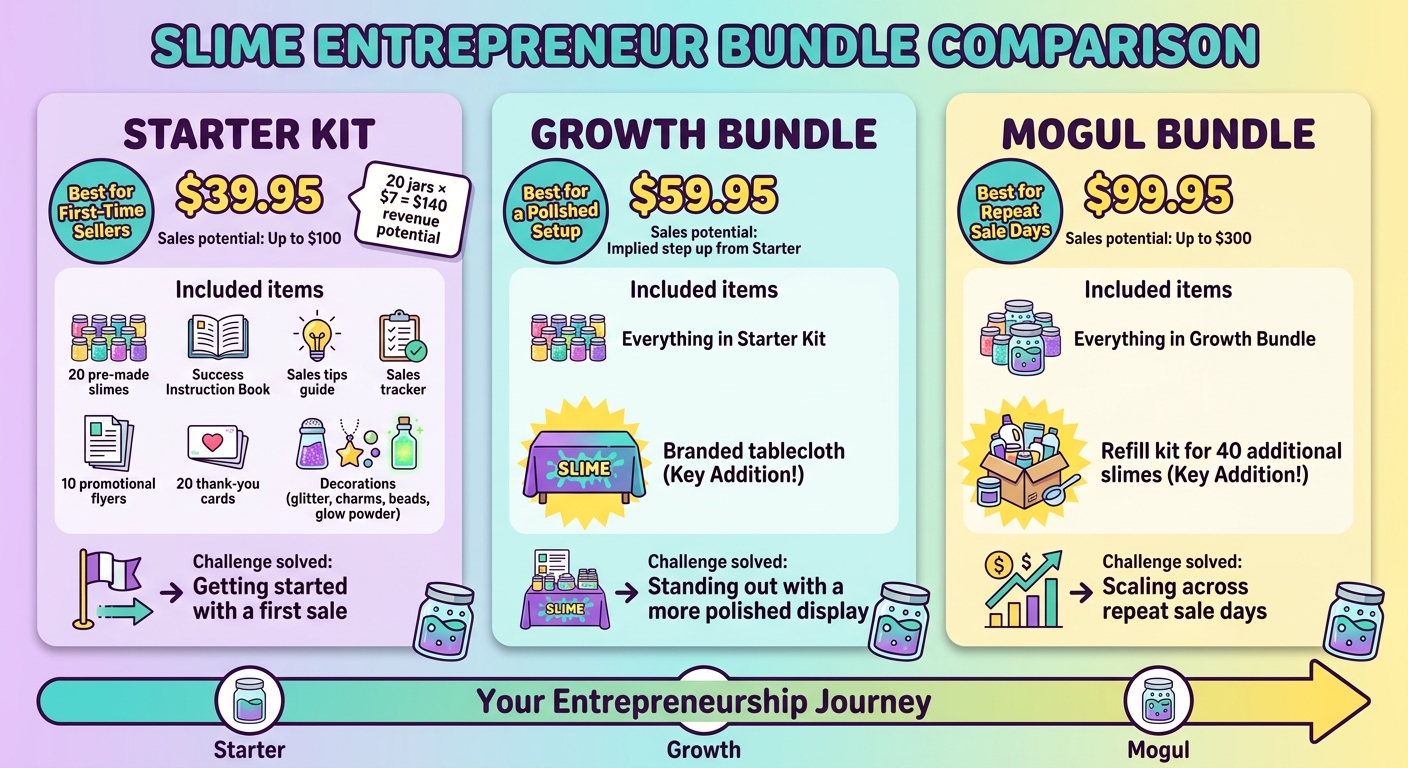
My Lil Startup Slime Kit Bundles: Features & Sales Potential Compared
Starter Kit, Growth Bundle, and Mogul Bundle at a Glance
Pick the bundle based on what the child wants to do next: get started, look more polished, or sell on repeat. Once they know what they want to sell, this is the next choice that matters.
The Starter Kit makes the most sense for a first-time seller. It includes what a child needs to run a first sale and get that early win. The Starter Kit costs $39.95 and is built to support up to $100 in sales.
The Growth Bundle fits kids who want their booth to look more put together. The tablecloth gives the setup a more official feel and helps it stand out during a sale. The Growth Bundle costs $59.95.
The Mogul Bundle is the best pick for repeat sale days. It adds a refill kit for 40 more slimes, which gives kids more inventory to keep selling. The Mogul Bundle costs $99.99 and is designed for up to $300 in sales.
Each bundle tackles the same basic challenge at a different point: getting started, looking polished, or selling more over time.
| Starter Kit - $39.95 | Growth Bundle - $59.95 | Mogul Bundle - $99.95 | |
|---|---|---|---|
| Challenge Solved | Getting started with a first sale | Standing out with a more polished display | Scaling across repeat sale days |
| Included Tools | 20 pre-made slimes, Success Instruction Book, sales tips, sales tracker, flyers, thank-you cards, and decorations | Everything in the Starter Kit plus a tablecloth | Everything in the Growth Bundle plus a refill kit for 40 additional slimes |
| Best Fit | First-time sellers | Kids who want a polished setup | Kids ready to sell more over time |
Conclusion: Slime Kits Make Business Lessons Concrete for Kids
Slime works well as a first business because kids can see every part of the process. They can personalize each slime, set a price, put it on display, and hand it to a customer in the same afternoon. That makes business lessons feel less abstract and more hands-on.
The built-in tools also help with the parts that often slow kids down, like planning, pricing, tracking sales, and following up with customers.
For families looking for a screen-free, educational way to get started, My Lil Startup offers a simple entry point. The kit handles the setup so kids can spend more time selling and learning.
FAQs
What age is best for a slime business kit?
A slime business kit works best for kids ages 6–12.
For younger kids, around ages 6–8, simpler activities tend to work best. They’re usually more comfortable with the hands-on part, like making slime, picking colors, and coming up with fun names.
Older kids, around ages 9–12, are often ready for more advanced ideas. That can include things like tracking profit, setting prices, and learning basic marketing.
How much profit can a child realistically make?
A child can realistically make up to $100 in profit from one slime kit.
That estimate assumes each slime sells for $5 and the cost of the kit is covered.
How can kids handle slow sales or tough feedback?
Kids can deal with slow sales or tough feedback by treating both as useful signals, not dead ends.
If sales are low, the first step is to figure out why. Maybe the price feels too high. Maybe the product doesn’t solve the problem clearly enough. Or maybe customers just don’t understand what makes it worth buying. From there, kids can ask for input, look for patterns, and test small changes, like adjusting the price or changing a product feature.
Negative feedback works the same way. The goal isn’t to take it personally. It’s to listen closely, think through possible fixes, and follow up after making changes. That kind of response shows maturity and helps build better communication habits.
Parents can help by giving support without taking over. A good role here is to encourage kids to think for themselves, bounce back after setbacks, and speak with customers in a calm, clear way.