
Kids don’t learn customer relationships by “selling.” They learn them by listening, being honest, and doing what they said they would do. For ages 6–12, even a small stand or simple sale can teach people skills that matter later. This is especially true when starting a slime business or other creative ventures.
Here’s the short version:
- I see the main lesson as this: trust is built in small moments
- Kids build that trust when they:
- greet people with a smile
- make eye contact
- listen before talking
- ask simple questions
- tell the truth when they don’t know something
- give the right item and correct change
- say thank you after the sale
- handle problems calmly
- Repeat buyers often come back because of the way a child treats them, not just because of the product
A few facts help show why this matters:
- According to the article, kids practice eye contact, patience, honesty, and follow-through in one sale
- A short question like “Who is this for?” can turn a one-way pitch into a two-way talk
- Even one small mistake fixed right away can help keep trust strong
What I’d take from this article: if you want a child to build customer relationships, keep the lesson simple. Teach them to make people feel comfortable, pay attention, and follow through after money changes hands.
| Focus | What kids should do | What to avoid |
|---|---|---|
| First impression | Smile, greet, use the customer’s name | Ignore, mumble, look away |
| Conversation | Ask open questions and listen | Talk over the buyer |
| Honesty | Say, “I’m not sure, but I can check” | Guess or make things up |
| Follow-through | Give the right item, count change, say thanks | Rush the sale |
| After-sale care | Answer questions and fix simple problems | Disappear after payment |
If I had to sum it up in one line, it would be this: kids build customer relationships by making each sale feel personal, clear, and respectful.
Teaching Kids Selling Skills: Stop Telling Your Kids Selling is Sleazy
sbb-itb-a46f019
How Relationship Selling Builds Trust
Once kids see that relationship selling is about people, the next lesson is simple: trust comes from small, everyday habits. It grows when kids do the little things that help customers feel seen and respected. When a child pays close attention to the person in front of them, people tend to relax.
Simple Actions That Make Customers Feel at Ease
Eye contact, a real smile, and a friendly greeting show a customer that the child is present and paying attention. These are basic manners, but they go a long way.
Using a customer's name adds a personal touch. A simple "Thanks for stopping by, Maria!" feels much warmer than a plain "thank you." And saying "Good to see you again!" to a repeat customer shows they were remembered. That kind of recognition can help bring people back. Parents can keep a short list of repeat customers' names so kids can greet them personally.
Why Honesty Beats a Perfect Answer Every Time
Friendly habits matter, but trust also depends on what kids say when they don't know an answer. It can be tempting to guess or act sure, but the better move is plain honesty: "I'm not sure, but I can find out and let you know." That response builds trust because customers can see the child cares more about being accurate than sounding polished.
"Exceptional customer service creates the foundation for business longevity and customer loyalty." - April Taylor, Founder, Jr. Moguls
When kids answer honestly, customers are more likely to trust them and feel at ease buying again. That same habit leads straight into the next part of building customer relationships: listening well and asking the right questions.
How to Help Kids Listen, Ask Better Questions, and Connect with Buyers
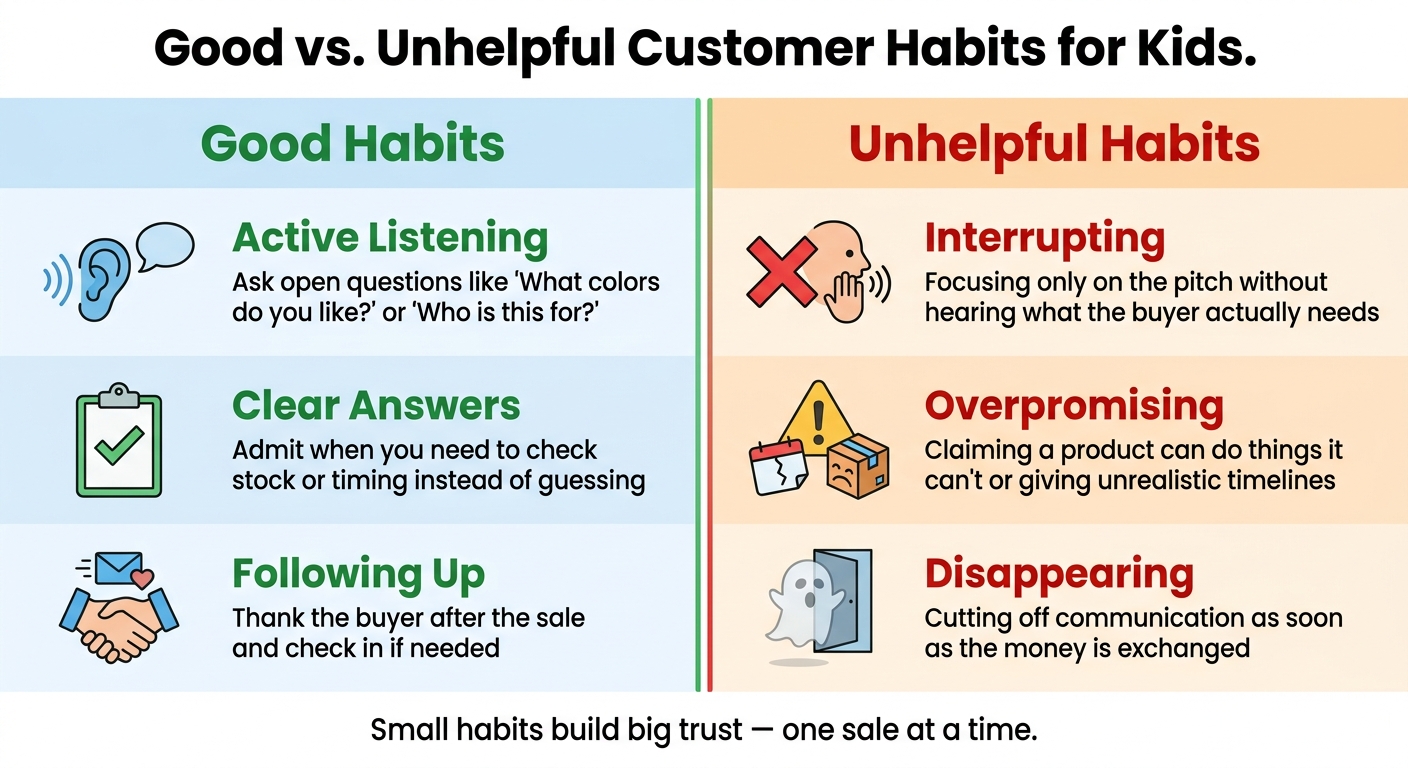
Good vs. Bad Customer Habits Kids Should Learn
Good listening can turn a sale from a simple transaction into a real conversation. When kids listen well, they get a clearer sense of what a buyer wants and can respond in a way that feels helpful, not pushy.
How to Practice Active Listening During a Sale
Active listening means paying close attention to what someone says and replying to the buyer's words instead of falling back on the same sales pitch every time. A simple way to practice it is with open-ended questions that get the customer talking.
Instead of asking "Do you want this one?" kids can say "What colors do you like?" or "Who is this for?" That small shift changes the whole tone of the conversation. It gives the child more to work with, helps them point the buyer to the right item, and shows the buyer that someone is actually listening.
This kind of listening also makes it easier to keep promises later, because the child has a better handle on what the buyer asked for in the first place.
How to Find Common Ground and Keep the Conversation Simple
The way a child listens and responds can matter just as much as the product itself.
Once a child starts listening well, the next move is to find a small point of connection. That might mean remembering what a customer likes or adding a personal note. It doesn't have to be big. Small touches often do the job.
Asking for feedback after a sale can help too. Questions like "What did you like?" or "What should I improve?" show that the child is paying attention and cares about the customer's input. Those little details can make buyers feel remembered instead of rushed.
Good Customer Habits vs. Unhelpful Habits: A Quick Comparison
Use this quick guide:
| Good Customer Habits | Unhelpful Habits |
|---|---|
| Active Listening: Asking "What colors do you like?" or "Who is this for?" | Interrupting: Focusing only on making the pitch without hearing the buyer's needs |
| Clear Answers: Admit when you need to check stock or timing | Overpromising: Claiming a product can do things it can't or promising unrealistic timelines |
| Following Up: Thanking the buyer after the sale | Disappearing: Cutting off communication as soon as the money is exchanged |
Once kids know what the buyer wants, they can focus on delivering exactly what they promised.
How to Keep Promises and Stay Helpful After the Sale
The sale doesn't end when the customer pays. Trust grows when kids follow through, answer questions, and fix small problems fast. Once they promise the right item, the next job is simple: deliver it exactly as described. Keeping customers happy after the sale matters just as much as making the sale in the first place, even when comparing a slime business vs lemonade stand.
How to Deliver What Was Promised
Before handing anything over, have your child do a quick check. Does the item match what they described? If they promised one blue slime with glitter and a thank-you card, they should make sure all three are there before the customer walks away.
It also helps to slow down during payment. Kids should count change out loud, confirm the amount, and keep bills and coins in separate containers. For younger children, play money is a good way to practice. It teaches them to pause, double-check, and thank the buyer before moving on.
Finish the sale with eye contact and a simple thank-you. For repeat customers or larger orders, a thank-you card adds a nice touch. Small follow-through like that can turn a first sale into a repeat customer.
How to Handle Questions and Simple Customer Concerns
A fast, honest response protects the trust built during the sale. If a buyer comes back with a question or concern, the goal is to stay calm and clear. Teach kids to listen first, then answer in simple words. If they don't know, they should say that and ask a parent for help. What matters most is responding well, not having every answer memorized.
When something goes wrong, kids should apologize, say what the problem is, and offer a simple fix. For example:
"I'm sorry this wasn't what you expected. Let me check with a parent and fix it."
It also helps to set parent-approved fixes ahead of time, like a same-day replacement for a clearly defective item. That way, your child knows what they can offer and won't feel stuck in the moment.
How to Practice Customer Service with a Simple Kid Business Setup
Use Role-Play at Home Before Selling to Real Customers
Before your child talks to a real customer, do a few practice rounds at home. Keep it short and relaxed. You play the customer, and your child plays the seller.
Have them practice the whole exchange from start to finish: a warm opener like "Hi there! Welcome to my stand!", a short explanation of what makes their product special, and a sincere thank-you at the end. Also ask your child to share one simple detail about how they made it. That small bit of story can make even a basic sale feel more personal.
How to Set Up a Kid-Friendly Sale That Puts Service First
Once your child feels good about the conversation, set up the stand so it’s easy to run. The My Lil Startup Slime Business Kit comes with flyers, thank-you cards, and a sales tracker to help kids stay organized. A neat, simple setup helps your child focus on the customer instead of scrambling to manage the table.
When the stand is ready, repeat customers become a great way to practice service. If someone comes back, have your child greet them warmly and ask for one short piece of feedback. That kind of care can turn a quick sale into a connection that sticks.
Conclusion: The Sales Lesson That Lasts Beyond the Money
That’s what helps turn a small sale into a skill that lasts. The habits kids build at a neighborhood stand - listening well, being honest, and doing what they say they’ll do - can carry into school, friendships, and future jobs.
FAQs
What age is best for learning this?
The best age for children to start learning how to build customer relationships is 6 to 12 years old. At this stage, kids can start picking up key people skills like active listening, clear communication, and problem-solving.
That’s where My Lil Startup comes in. Its hands-on entrepreneur kits are made for this age group and help children build confidence while learning practical business skills through action, not just theory.
How can I help a shy child talk to customers?
Start with small, low-pressure role-playing at home. Keep it simple: greet a buyer, answer a basic question, or fix a small mistake. That gives your child a chance to get used to the back-and-forth of a real conversation without a lot of pressure.
As their confidence grows, add one skill at a time, like eye contact, which helps build trust and connection. My Lil Startup kits can help here too, since kids often feel more ready when they have polished materials and marketing tools in hand.
What should my child do if a customer is unhappy?
Your child should stay calm, listen closely, and show empathy. The first step is simple: let the customer know they’ve been heard with a sincere apology, such as, "I’m sorry about that."
From there, they can ask a few follow-up questions and move the conversation toward a fix, like a replacement or a small extra item. If the situation feels too big to handle alone, they should bring you in for support.