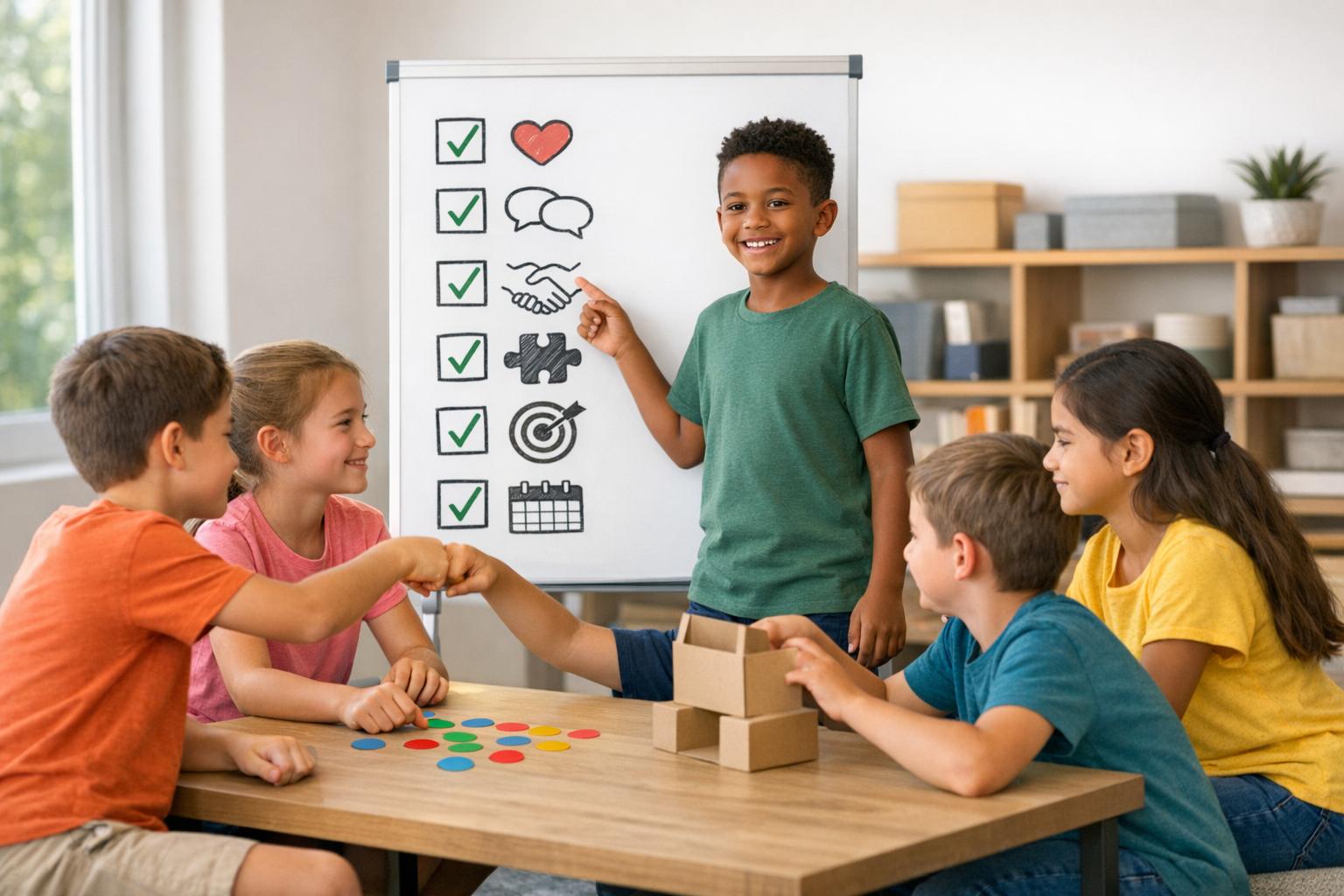

Team activities are one of the best ways to help kids develop leadership skills early in life. From sports to group projects, these activities teach kids how to communicate, solve problems, and take responsibility in a practical, hands-on way. Leadership isn't just about being in charge - it's about guiding a group toward a shared goal while building empathy, confidence, and teamwork.
Here’s a quick summary of what kids gain through team activities:
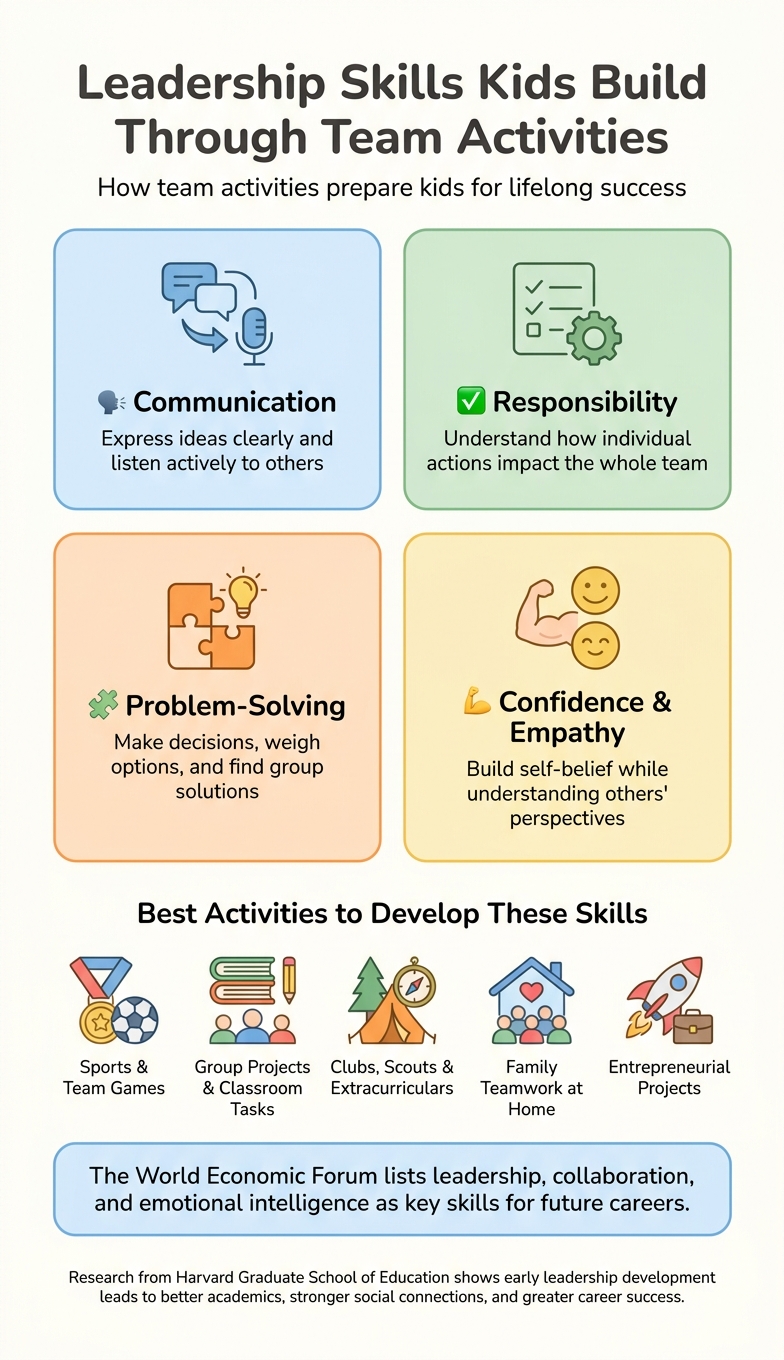
- Communication: Kids learn to express ideas clearly and listen to others.
- Responsibility: They understand the importance of fulfilling their roles.
- Problem-Solving: Challenges help them make decisions and find solutions.
- Confidence & Empathy: Taking on roles builds self-belief and understanding of others.
These skills prepare kids for future success in academics, social situations, and careers. Parents and adults play a key role by assigning clear roles, encouraging decision-making, and reflecting on lessons learned after activities. Simple steps like rotating leadership roles or involving kids in family teamwork can further strengthen their abilities.
Team activities provide a safe, low-pressure environment for kids to practice leadership, make mistakes, and grow into thoughtful, capable leaders.
Leadership Skills Kids Build Through Team Activities
Team Building Games for Kids | Low Prep, All Ages, All Abilities
Leadership Skills Kids Build Through Team Activities
Developing leadership skills in kids often starts with team activities. These activities go beyond just keeping kids busy - they offer practical opportunities to build skills that traditional classroom lessons can’t fully teach. Through shared tasks, group challenges, and collaborative projects, children gain hands-on experience in leading and working with others.
Communication and Collaboration
Team activities teach kids that sharing their ideas is only part of the equation - how they communicate those ideas is equally important. In team settings, kids learn to express themselves clearly, listen actively, and interpret social cues from their peers.
"In a team setting, they quickly see that strong communication is what turns confusion into success." - Mission Grit
Adults can support this by assigning kids complementary roles, like one child holding paper while another applies tape. Over time, children begin to appreciate the value of working together and leveraging each other’s strengths instead of competing. This collaborative mindset often leads to more inventive solutions and reinforces accountability within the group.
Responsibility and Accountability
Being part of a team means that every individual’s contribution matters. When one child doesn’t fulfill their role, the entire group feels the impact. This dynamic naturally teaches kids the importance of being reliable and dependable.
"Responsibility is the cornerstone of values like honesty, integrity, and accountability." - Michael Vallejo, LCSW, Mental Health Center Kids
Whether it’s completing a classroom task or playing a backyard game, kids begin to understand how their actions directly affect the team’s success. These experiences build trust among teammates and lay the groundwork for developing problem-solving abilities.
Problem-Solving and Decision-Making
Team activities often come with challenges, such as disagreements over materials or clashing ideas. These moments are opportunities for kids to practice problem-solving and decision-making. They learn to suggest solutions, weigh different options, and work toward a group consensus before moving forward.
"When a choice causes a problem, guide a do-over: name what happened, offer two better options, and try again right away." - Susan Good, Retired Educator
This kind of low-pressure problem-solving helps kids develop critical thinking skills they can use in higher-stakes situations later in life.
Self-Confidence and Empathy
Taking on roles within a team helps kids build confidence in their abilities. At the same time, working closely with peers fosters empathy, as they begin to understand and appreciate different perspectives and emotions.
"Putting themselves in someone else’s shoes" becomes second nature as kids navigate challenges with their teammates.
Confidence and empathy grow hand-in-hand in these settings, shaping children into thoughtful leaders who balance assertiveness with compassion.
The Leadership Gap: Why Kids Need Team Activities
Hearing about leadership and actually practicing it are two entirely different experiences. And it’s often this gap - between understanding leadership in theory and applying it in real life - that many kids struggle to bridge.
This disconnect can have tangible consequences. Without real opportunities to take on leadership roles, kids miss out on what researchers call "successful experiences." These are the small victories that build confidence and prepare them for decision-making and guiding others.
"Kids can lead today, not just someday." - Laura Bouttell, Quarterdeck
Team activities provide a safe, low-pressure environment where kids can step into leadership roles, make mistakes, and learn without facing serious consequences. For example, when a child takes charge of a game and the plan doesn’t work out, they learn valuable lessons in staying calm, regrouping, and trying again.
These activities also teach an essential difference: leading versus bossing.
"Leadership is helping a group work together to achieve something good. Leaders do not boss people around - they help people do their best and make things better for everyone." - Quarterdeck
"Play lowers the pressure and raises participation. Games reduce the fear of being wrong, which helps children take small risks and try new strategies." - Jordan Ellis, Senior Family Learning Editor
The World Economic Forum lists leadership, collaboration, and emotional intelligence as key skills for future careers. Team activities are one of the most effective ways to help kids start developing these abilities - right now. These early experiences lay a strong foundation for continued growth in leadership and collaboration skills.
Team Activities That Build Leadership in Kids
Sports and Team Games
Team sports naturally encourage kids to develop leadership skills. Activities like soccer, basketball, and baseball place them in situations where quick thinking, clear communication, and motivation are essential. Roles such as team captain allow kids to mentor teammates, guide less experienced players, and keep the group focused on a shared objective.
"Leadership for kids begins with a fundamental truth: children are not preparing to become leaders someday - they can lead right now." - Laura Bouttell, Author and Leadership Coach
Sports also provide immediate feedback, as players must adapt to changing situations in real time. This ability to adjust helps kids build resilience - something that is harder to teach in traditional classroom settings.
While sports offer a dynamic way to develop leadership, other opportunities exist in academic and extracurricular activities.
Group Projects and Classroom Tasks
Classroom tasks and group projects are another excellent way for kids to practice leadership. Assigning roles like timekeeper, materials manager, or note-taker helps them understand how individual contributions impact the team. Rotating roles, such as line leader or equipment manager, ensures that every child gets a chance to lead.
This approach highlights an important point: leadership isn’t just for the most outspoken kids. Quiet, detail-oriented children often thrive when given structured roles with clear responsibilities. These experiences teach essential skills like organizing tasks, delegating responsibilities, and resolving conflicts - abilities that the World Economic Forum identifies as critical for future careers.
Clubs, Scouting, and Extracurricular Teams
Youth organizations such as Boy Scouts, Girl Scouts, and student government provide structured environments for kids to grow as leaders. These programs often require participants to take on responsibilities, earn roles through effort, plan events, and advocate for others. Leadership in these settings is merit-based, showing kids that it’s something earned through action and commitment.
Student government, in particular, helps kids think beyond their own needs and focus on what’s best for their peers. These experiences prepare them for leadership roles in larger, more complex settings.
But leadership development doesn’t have to stop with formal programs - it can start right at home.
Family Teamwork Activities at Home
Home is a powerful, yet often overlooked, place for kids to practice leadership. Activities like planning meals, organizing family projects, or dividing chores allow them to develop decision-making and accountability skills. A fun way to encourage this is by creating a "Leader for a Day" system, where one child takes charge of planning the day’s meals, activities, and tasks. This builds confidence and teaches negotiation skills.
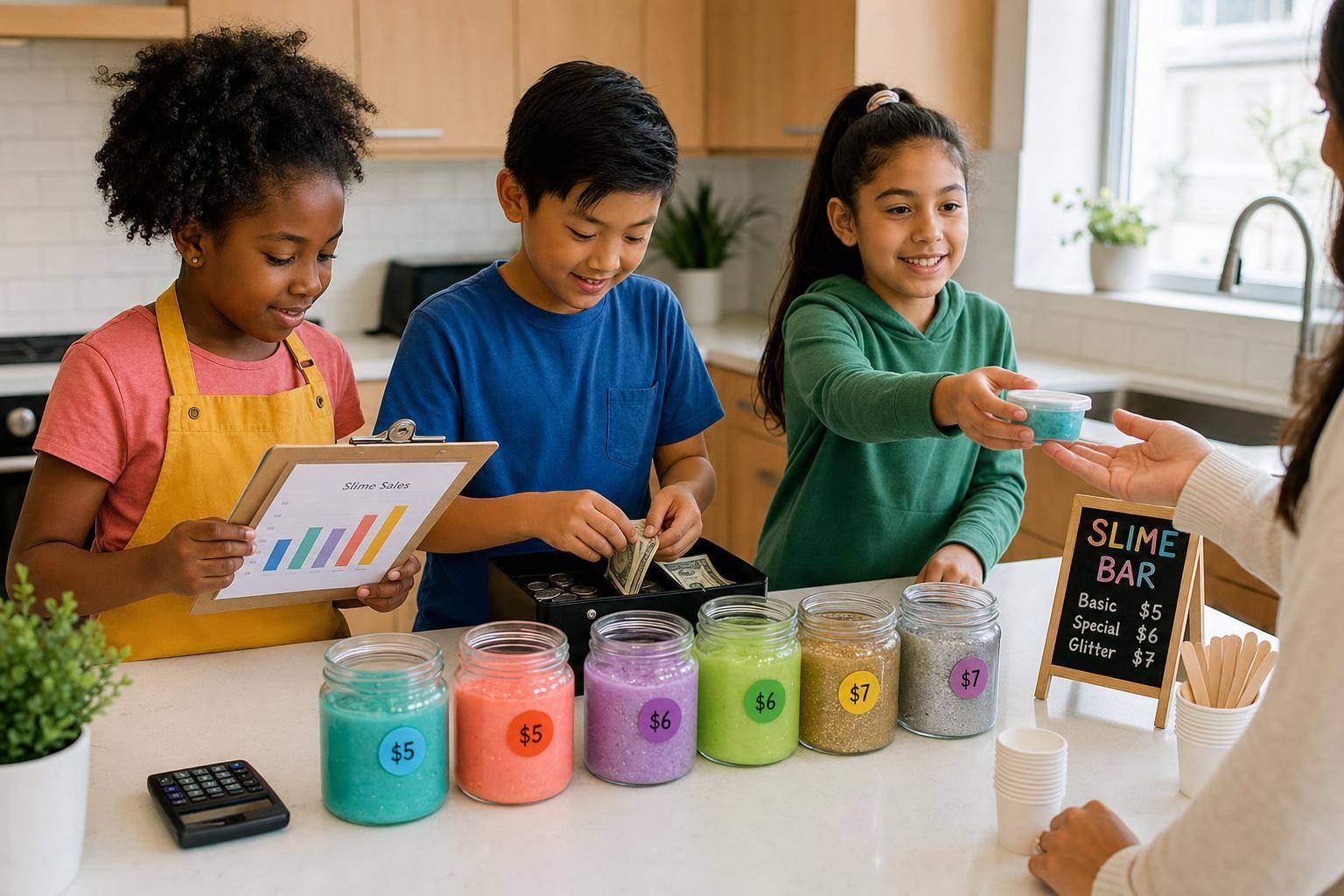
For kids eager to take on more responsibility, entrepreneurial projects provide a hands-on way to grow. For example, in late 2025, parents Amanda and Kaci shared how their children used the My Lil Startup Slime Business Kit to start small businesses. By selling 20 slimes at $5 each, the kids earned $100 while learning to count change, manage customer interactions, and track sales. These real-world experiences offer lessons that extend far beyond the classroom.
"Raising a young leader isn't about preparing the path for your child. It's about preparing your child for the path." - Michael Grose, Parenting Educator
How Adults Can Support Kids' Leadership Growth
Adults play a crucial role in helping kids develop leadership skills through team activities. Thoughtful guidance can make all the difference.
Assigning Clear Roles and Responsibilities
Giving kids vague instructions like "you're in charge" doesn't teach effective leadership. Instead, assign specific roles with clear titles such as "Timekeeper", "Materials Manager", or "Mission Leader." Pair these roles with simple job descriptions. For example, you could use a Mission Card - a small index card that lists the role name, a main responsibility, and a success condition. For instance, a Timekeeper's card might say: "Remind the team when 2 minutes are left; success means the team adjusts their pace."
This approach works across all age groups, but the complexity of the roles should match the child's developmental stage.
Encouraging Decision-Making and Conflict Resolution
One of the best ways to teach leadership is by stepping back and letting kids handle challenges. When conflicts arise, avoid solving the problem for them. Instead, guide them to follow a simple three-step process: state the issue, request a change, and propose a solution.
When mistakes happen, shift the focus from assigning blame to finding solutions. Using a reset phrase can help redirect the conversation toward next steps. As Jordan Ellis, Senior Family Learning Editor, explains:
"Leadership is not about being the loudest voice in the room; it is about helping the whole team succeed."
Encouraging kids to resolve conflicts on their own and share leadership responsibilities helps develop these skills further.
Rotating Leadership Roles
To ensure everyone gets a chance to lead, rotate leadership roles regularly. This could happen after each round of a game or on a weekly basis. Rotating roles prevents one child from dominating and gives quieter kids the opportunity to step up. It also fosters empathy - for example, a child who has acted as the Timekeeper will better understand the role's importance when someone else takes over.
At the end of each rotation, hold a quick "Glow and Grow" session. Ask the group to share one thing that went well (the glow) and one area to improve (the grow). This keeps feedback constructive and helps kids focus on growth rather than performance.
Helping Kids Apply Leadership Lessons After Team Activities
The real growth in leadership happens after the activity ends. Without reflecting on the experience, the lessons learned can easily slip away. A quick, focused conversation can turn a single activity into a foundation for lasting leadership skills. These reflective moments help kids truly absorb the hands-on lessons they gain during team activities.
Reflection and Discussion
Open-ended questions are great tools for reinforcing leadership lessons. Try asking, "What went well?", "What would you do differently next time?", or "Did everyone feel included?" These kinds of questions encourage kids to think critically about their actions and decisions. If mistakes come up, focus on the actions, not the child. For example, instead of assigning blame, you could say, "That was a tough call - what could you try instead?" This approach fosters growth and learning.
Damon Lembi, CEO of Learnit, highlights the importance of learning from setbacks:
"Every failure, handled honestly, is a leadership development moment. Take that away and you take away the lesson."
For kids aged 8–12, a leadership journal can be a powerful tool. Encourage them to jot down one challenge they faced and one thing they learned each week. These reflections can help them fine-tune their leadership skills over time.
Recognizing Effort and Initiative
Reflection is just the start - recognizing effort is equally important. When kids see their hard work acknowledged, it reinforces positive behaviors and builds resilience. For example, saying something like, "You worked really hard to keep the team on track," highlights their effort and encourages them to keep growing as leaders.
It’s also important to recognize leadership moments as they happen. If a child steps up by actively listening to a frustrated teammate, point it out. Verbal recognition like this helps make leadership visible and builds confidence, especially for kids who might lead in quieter ways. As Damon Lembi explains:
"Confidence is not taught. It is earned - rep by rep, failure by failure, recovery by recovery."
Conclusion: Setting Kids Up for Future Success
Leadership isn’t something kids are simply born with - it’s a skill that grows through meaningful experiences and interactions. Team activities create a safe space for children to practice essential skills like communication, responsibility, problem-solving, and building confidence.
Laura Bouttell, Managing Director of Quarterdeck, captures this idea perfectly:
"Leadership for kids is not about creating mini-executives or youth politicians. It is about developing the capabilities - responsibility, empathy, courage, initiative, and service - that enable children to contribute positively throughout their lives."
This progression from team-based learning to real-world application is a natural one. For some kids, the next step might even involve exploring entrepreneurship. My Lil Startup offers entrepreneur kits tailored for kids between 6 and 12 years old. For instance, the Slime Business Kit, priced at $39.95, equips young entrepreneurs with tools to manage inventory, track sales, pitch products, and engage with customers. One parent, Marcus Branford, shared his perspective: "This is all about hands-on learning - whether it’s mastering money management or nailing the perfect pitch, and help them shine in the real world."
The skills kids develop in team activities - like accountability, empathy, and decision-making - are the same ones they’ll depend on as they navigate life’s challenges. The earlier they start practicing these abilities, the more naturally they’ll step into leadership roles in every area of life.
FAQs
What team activities work best for shy kids?
Shy children thrive in environments where they can engage gradually and feel supported. Activities like trust-building games, collaborative creative projects, or even community service tasks are excellent ways to help them feel included without overwhelming them. These options allow for meaningful participation while minimizing social pressure.
Focusing on individual strengths can also make a big difference. For example, activities like creating "This is Me" posters or sharing personal stories in a safe, encouraging space can nurture self-expression. Over time, these experiences help shy kids develop confidence and even discover leadership qualities, all at their own pace.
How can I teach leadership without my child becoming bossy?
Helping kids develop leadership skills without veering into bossiness is all about fostering collaboration, empathy, and inclusion. Leadership isn’t about giving orders - it’s about guiding others in a positive way, sharing responsibilities, and being open to different viewpoints.
Here’s how you can approach it:
- Promote teamwork by assigning specific roles during group activities. This helps kids understand how to work together effectively.
- Provide private feedback to help them reflect on their leadership style without feeling criticized in front of others.
- Ask reflective questions like, “Did everyone feel included?” to encourage self-awareness and inclusivity.
Celebrate moments of cooperation and show them how to bounce back from mistakes. These lessons build leadership skills rooted in respect and empowerment, not control.
How do I build leadership at home without sports?
You don’t need sports to teach leadership at home. Focus on fostering skills like responsibility, teamwork, and decision-making in everyday life. Start by assigning small tasks - like setting the table or organizing family schedules - that give kids a sense of ownership.
Get them involved in family plans, whether it’s deciding what’s for dinner or brainstorming weekend activities. Encourage them to take on roles during group activities, such as leading a family game night or planning a small project.
For a fun twist, try role-playing games like “leader for a day,” where they get to make decisions for the family (within reason). It’s a playful way to help them practice leadership in a low-pressure setting.
Most importantly, lead by example. Show respect in your interactions and talk through their decisions with them. This kind of reflection helps them understand the impact of their choices and builds the confidence they need to grow into strong leaders.