

When kids start their own small businesses - like selling slime or lemonade - how they interact with customers can make or break their success. Teaching them to listen, communicate clearly, and solve problems builds both confidence and loyalty. This guide provides practical tips and scripts for kids aged 6–12 to handle common customer situations, from greeting first-time buyers to addressing complaints. Here’s what you’ll learn:
- Key Skills: Listening, politeness, and problem-solving.
- Handling Scenarios: Greeting customers, explaining product value, resolving issues, and encouraging repeat visits.
- Helpful Phrases: Ready-to-use scripts for smoother interactions.
- Building Loyalty: Consistency, thank-you notes, and seeking feedback.
With the right tools and practice, kids can turn customer interactions into opportunities to grow and succeed in their entrepreneurial journey.
Session 7: Kids Learning Customer Service
Basic Principles of Customer Interaction
Before your child dives into specific customer scenarios, it’s important they grasp three key principles that can make every interaction successful. These fundamentals apply whether they’re selling their first slime or helping their twentieth customer.
Listening and Clear Communication
Effective customer interaction begins with truly listening. Teach your child to focus on the customer by maintaining eye contact, nodding to show they’re engaged, and avoiding interruptions. After the customer finishes speaking, encourage them to repeat back what they understood. For example, they could say, "So, you’re looking for a slime that’s sparkly and blue?" This step not only confirms understanding but also reassures the customer that they’re being heard.
When it’s time to respond, simplicity is key. Encourage clear and steady communication, like saying, "This one has extra glitter and stays stretchy for weeks." If your child feels shy about eye contact, start small during role-playing exercises, gradually building their confidence. Mastering these skills helps create trust and makes customers feel valued.
Being Polite and Enthusiastic
A mix of politeness and genuine enthusiasm can turn a simple transaction into a memorable experience. Encourage your child to use friendly phrases like, "Thank you for stopping by!" or "I love helping you find the perfect slime!" A smile and open body language go a long way in making customers feel welcome.
Enthusiasm doesn’t mean being overly loud or pushy. It’s about showing real interest in helping. For instance, when greeting a customer, your child might say, "Hi! Welcome to my slime stand. Would you like to check out our glow-in-the-dark slimes?" This combination of politeness and energy can leave a lasting impression and encourage repeat visits.
Thinking Through Problems
Challenges are inevitable, whether it’s a customer receiving the wrong color slime or finding their slime too sticky. Teach your child to handle these situations with patience and empathy. They can start by acknowledging the issue - saying something like, "I’m sorry about that!" - and then work on a solution. For example, if they mixed up an order, they could respond, "Oops, I made a mistake. Here’s the correct one, and I’ll add a free decoration!"
Problem-solving isn’t about having all the answers right away. It’s about staying calm, listening carefully, and focusing on what will make the customer happy. Role-playing these scenarios, such as resolving complaints or fixing mistakes, can help your child build the confidence they need to handle real-life situations smoothly.
Common Customer Situations and How to Handle Them
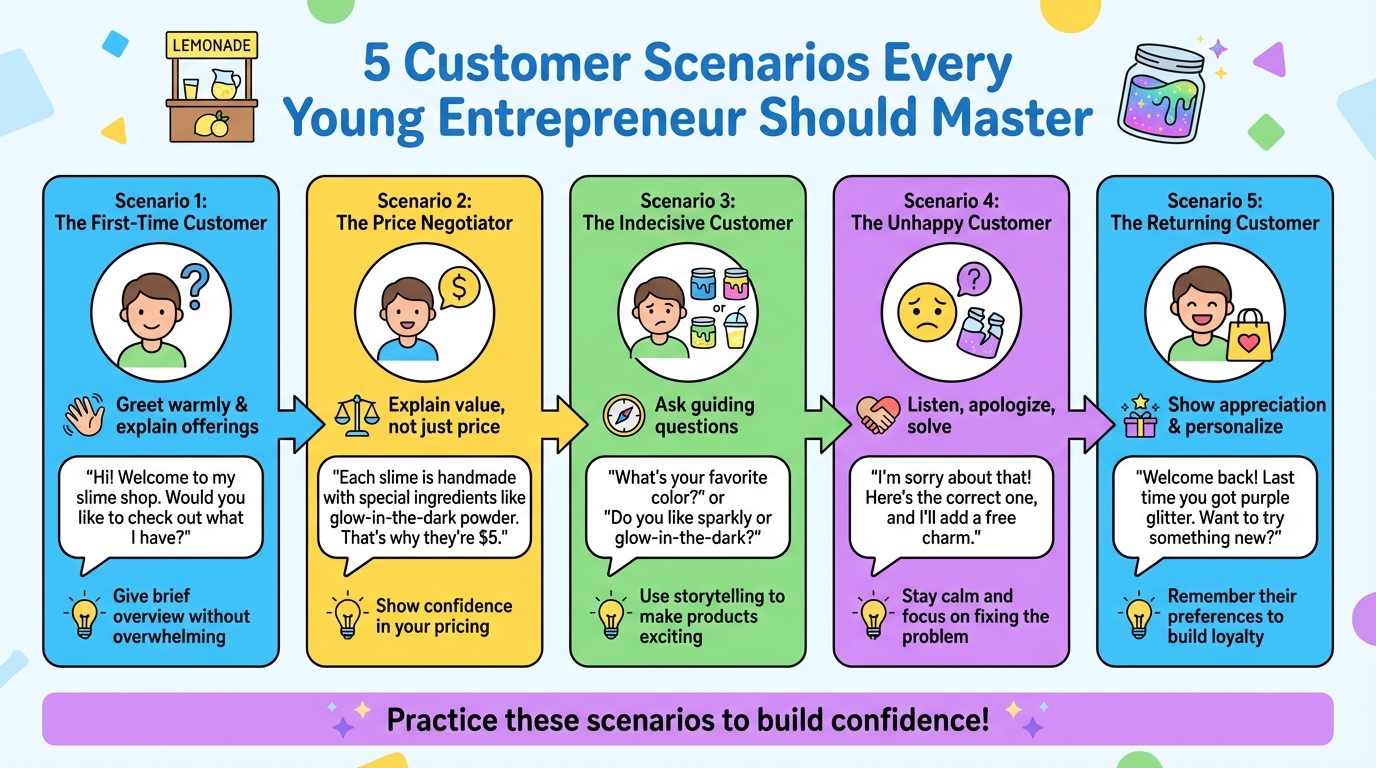
5 Common Customer Scenarios Kids Face in Small Business
Now that your child knows the basics, it's time to explore real-life scenarios they'll face while running their first business. Every situation calls for a slightly different approach, but the core principles stay constant: listen carefully, stay upbeat, and focus on helping the customer.
The First-Time Customer
First impressions are everything. When someone visits your child's slime stand for the first time, they may not know what to expect. Teach your child to start with a friendly greeting like, "Hi! Welcome to my slime shop. Would you like to check out what I have?"
From there, they can give a brief overview of the products without overwhelming the customer. For example: "I have 20 different slimes with fun mix-ins like glitter, charms, and glow-in-the-dark powder. Each one is $5." This gives the customer a clear idea of the options and pricing. If the customer seems interested, your child can highlight a few popular items or personal favorites to help them make a choice.
The Customer Who Wants a Lower Price
When a customer says, "Can I get it for less?" or "That's too expensive", it's not a dead end - it’s a chance to explain the value of the product. As My Lil Startup puts it, "When a customer says, 'It's too expensive,' it's not the end of the conversation - it's a chance to show why your product is worth it."
Your child can respond confidently by emphasizing the effort and quality behind their slimes. For example: "I understand. Each slime is handmade with special ingredients like glow-in-the-dark powder and unique charms. That’s why they’re $5 each." This shifts the focus from price to the craftsmanship and care that goes into each product. Sticking to their pricing shows confidence and helps the customer see the value.
The Customer Who Can't Decide
Some customers will stare at the options, unsure of what to pick. This is a perfect opportunity for your child to step in and help. They can ask simple, guiding questions like, "What’s your favorite color?" or "Do you like sparkly or glow-in-the-dark things?" These questions make it easier for the customer to narrow down their choices.
Another great strategy is storytelling. Instead of just pointing to a slime, your child could say, "This one is called 'Rescue Squad Slime' - it’s super stretchy and has tiny star charms inside." Giving slimes fun names or stories makes them more exciting and helps customers connect with the product.
The Unhappy or Complaining Customer
Even the best businesses face complaints now and then. Maybe the slime was too sticky, or the customer got the wrong color. The key here is to stay calm and show empathy. Teach your child to listen first and respond with a genuine, "I’m sorry about that!"
From there, focus on fixing the problem. If your child made a mistake, they can say, "Oops, I gave you the wrong one. Here’s the correct slime, and I’ll add a free charm to say sorry!" For more complicated issues, encourage them to ask questions like, "Can you tell me what happened so I can make it right?" This shows they care about solving the issue. If the problem feels too big, they can say, "Let me check with my mentor", and loop in a parent or mentor for support.
The Returning Customer
Loyal customers are the heart of any business. When someone comes back for another purchase, your child should make them feel appreciated with a warm, "Welcome back! It’s great to see you again!"
If possible, encourage your child to recall what the customer liked before. They might say, "Last time you got the purple glitter slime. Do you want to try something new, or would you like another one of those?" This personal touch builds a strong connection and keeps customers coming back. Happy returning customers often spread the word to others, which is one of the best ways to grow a business.
Every interaction helps your child develop skills that will set them up for long-term success as they brainstorm and grow their business.
Helpful Phrases and Scripts for Kids
The right words can make a big difference when it comes to boosting kids' confidence and making customer interactions smoother. These practical scripts are designed to help young entrepreneurs communicate clearly, solve problems, and connect with customers. They’re simple enough to use right away but flexible enough to adapt to any situation.
Greeting Customers
A warm and friendly greeting sets the tone for a positive interaction. Your child could start with something like, "Hi there! How’s your day going?" or "Welcome! Would you like to check out what I’m selling today?" Adding a personal touch makes it even better. For example, they could say, "Hello! My name’s [Name], and I made these slimes myself. Can I show you how they work?" This not only introduces them but also highlights their effort and enthusiasm.
Answering Questions and Concerns
When customers have questions or concerns, being empathetic and helpful is key. If a customer mentions a problem, your child might say, "I’m sorry to hear that. Let’s figure this out together." If someone is waiting their turn, they could reassure them with, "Thanks for your patience - I’ll be with you shortly." For requests they can’t fulfill right now, they might respond, "That’s a great idea! I’ll think about adding that next time." These phrases help keep the conversation friendly and productive.
Once concerns are addressed, a confident and polite closing can leave a lasting impression.
Finishing the Sale
The way a sale ends is just as important as how it begins. After completing a transaction, your child can thank the customer with a warm, "Thank you so much for your support!" or "I hope you love your slime. Have an awesome day!" They could also confirm the sale by saying, "Here’s your slime and your change. Would you like a thank-you note with that?" To encourage future visits, they might add, "Thanks for stopping by! I’ll be here until 3:00 PM if you want to come back."
Encourage your child to practice these phrases at home before the big day. The more familiar they are with the scripts, the more confident and natural they’ll feel when interacting with real customers. This confidence is just one of the many reasons entrepreneurship for kids is such a powerful alternative to screen time.
Building Customer Loyalty Over Time
Keeping customers around isn't just good for business - it’s smart economics. These strategies build on earlier customer engagement techniques to ensure lasting connections.
Staying Consistent and Reliable
Customer loyalty starts with one key principle: consistency. Whether it’s their first or tenth purchase, customers should know exactly what to expect when they buy from you. For example, if someone orders slime, it should always meet the same high-quality standards - stretchy, fun, and exactly as advertised. If one customer gets a perfectly stretchy slime with fun decorations while another ends up with a disappointing product, trust can erode quickly. Consistency in both product quality and friendly service is essential for maintaining trust and reinforcing the customer interaction skills you’ve worked hard to build.
Thank-You Notes and Follow-Ups
A handwritten thank-you note can go a long way in making customers feel appreciated. Imagine receiving a note that says, "Thank you for buying the purple galaxy slime! I had so much fun making it, and I hope you love playing with it." It’s a small gesture, but it creates a personal connection. Sending these notes shortly after the purchase keeps the positive experience fresh in their minds. Adding a little extra - like a sticker, a discount code, or even a free sample - can surprise and delight them, giving them another reason to come back.
But don’t stop at just saying thank you. Follow up by asking for feedback. This completes the appreciation loop and shows you genuinely care about their experience.
Asking for Feedback to Get Better
Asking for feedback sends a clear message: your customers matter. Simple questions like, "What did you think of your slime?" or "How can I improve?" show that their opinions are valued. This ties back to the importance of listening and clear communication, which was discussed earlier. Jacqueline Killian, owner of Beyond The Blackboard, emphasizes:
Being available to answer any questions shows that your customers' purchases and satisfaction are important to you.
Taking feedback seriously - especially when it’s critical - can turn a negative experience into an opportunity to strengthen trust. For example, addressing a complaint effectively can transform an unhappy customer into a loyal one. And satisfied customers? They often become unofficial brand ambassadors, sharing their positive experiences with friends and family, which naturally helps your business grow.
Conclusion
Building strong customer interaction skills isn’t just about business - it’s about cultivating abilities like confidence, clear communication, and problem-solving that can shape success throughout life.
Take the story of a young entrepreneur in fall 2025, for example. Using a My Lil Startup kit, she sold her entire inventory within a week, reinvesting 50% of her earnings into new stock. Along the way, she honed her creativity, conducted market research, practiced social skills, and even mastered counting change. Her experience shows how customer-focused skills can directly fuel business growth and financial understanding.
Marcus Branford, a My Lil Startup customer, summed it up perfectly:
This is all about hands-on learning - whether it's mastering money management or nailing the perfect pitch, and help them shine in the real world.
For parents looking to help their kids develop these skills, a ready-to-use kit can be a game-changer. The My Lil Startup Slime Business Kit provides everything they need to get started: 20 pre-made slimes, marketing flyers, thank-you cards, a sales tracker, and step-by-step instructions. Starting at $39.95, these kits are designed to help kids earn $100 while navigating every aspect of customer interaction - from welcoming new buyers to building loyalty with returning ones.
With the right tools and a supportive environment, kids can practice, make mistakes, and grow - turning every customer interaction into an opportunity to learn and succeed.
FAQs
How can I help my kid practice customer scripts at home?
You can help your child get comfortable with customer scripts by role-playing everyday situations. Practice things like greeting customers, explaining a product, answering questions, or even addressing objections. Switch roles between being the customer and the seller, and offer helpful feedback along the way. To keep it fun, try adding a bit of storytelling or use props and visual aids. This not only boosts your child’s confidence and communication skills but also turns learning into an enjoyable experience.
What should my child do if a customer asks for a refund?
If a customer asks for a refund, your child should handle the situation with politeness and composure. A good response might be: "I'm sorry to hear you're not satisfied. Let me review our refund policy and see how I can assist you." It's crucial to acknowledge their concern, clearly explain the steps involved in the refund process, and take appropriate action if the policy allows. This approach helps the customer feel heard and appreciated.
How can shy kids sell confidently without forcing eye contact?
Shy kids can excel in sales by using communication methods that don't require direct eye contact. Encourage them to concentrate on active listening, maintain a friendly tone, and incorporate gestures or non-verbal cues like smiling to convey warmth. Providing a supportive environment where they feel comfortable expressing themselves can help them gain confidence in sales conversations without the stress of constant eye contact.