

Kids aged 6–12 can develop problem-solving, financial, and entrepreneurial skills through fun, hands-on business challenges. From running a lemonade stand to selling crafts online, these activities teach essential concepts like managing money, customer service, and turning ideas into action. Here’s a quick look at seven engaging options:
- Lemonade Stand: Teaches pricing, profit calculation, and customer interaction.
- Slime Business: Involves cost management, marketing, and product creativity.
- Car Wash Service: Focuses on service-based skills, budgeting, and time management.
- Dog Walking: Builds responsibility, communication, and basic money management.
- Laundry Service: Introduces tracking expenses, pricing, and customer care.
- Baked Goods Delivery: Combines baking with financial planning and marketing.
- Selling Online: Covers inventory, pricing strategies, and online marketing.
These activities not only help kids earn money but also build confidence, decision-making skills, and independence. Whether it’s a small neighborhood project or an online venture, these challenges are perfect for young learners to gain practical experience while having fun.
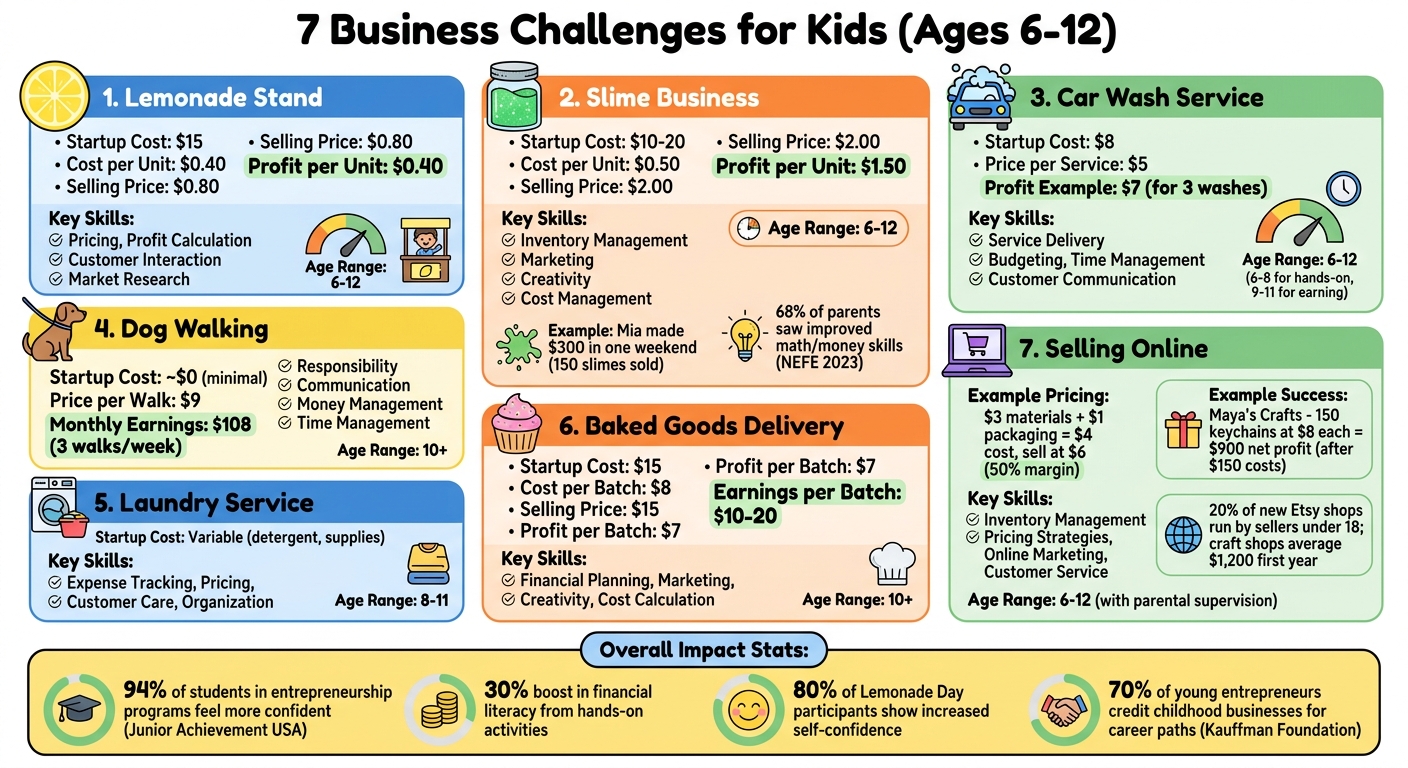
7 Business Challenges for Kids: Skills, Costs, and Earnings Comparison
1. Run a Lemonade Stand
Teaches Basic Business Concepts
Running a lemonade stand is a simple way for kids to grasp the basics of business. With an initial investment of about $15 for supplies like lemons, sugar, and cups, they can learn how costs and profits work. For example, if each cup costs $0.40 to make and sells for $0.80, kids quickly see how a $0.40 profit is made per cup. Picking the right spot - like a park or a bustling yard sale instead of a quiet street - teaches them about market research and the importance of finding where customers are likely to gather. These lessons provide a strong foundation for understanding how to plan and adapt in real-life situations.
Encourages Problem-Solving Skills
Once the stand is up and running, kids encounter challenges that require quick thinking. What happens if it starts raining? Or if customers say the lemonade is too sweet? These moments push kids to problem-solve. They might adjust the recipe or set up shop indoors at a community event. Each hurdle encourages them to think critically and adapt to changing circumstances.
Promotes Creativity and Hands-On Learning
Beyond the numbers and problem-solving, a lemonade stand is a chance to get creative. Kids can design colorful signs to grab attention or try out fun flavors like pink lemonade to stand out. Adding extras like cookies or loyalty punch cards can make the stand more appealing. These hands-on experiences not only teach business concepts but also make the process enjoyable and engaging for kids. It’s learning disguised as fun.
2. Start a Slime Business
Teaches Basic Business Concepts
Starting a slime business is a fantastic way for kids to get hands-on experience with essential business skills like pricing, inventory management, and marketing. For example, raw materials for a single slime cost around $0.50, but selling it for $2.00 nets a $1.50 profit. Kids also learn how to manage supplies and restock when needed. On the marketing side, they can create attention-grabbing flyers featuring fun varieties like "glow-in-the-dark slime" or set up a booth with eye-catching decorations, such as a branded tablecloth.
Encourages Problem-Solving Skills
Running a slime business isn’t without its challenges, but that’s where kids can hone their problem-solving abilities. If a batch of slime turns out too sticky, they’ll experiment with adjusting the glue-to-activator ratio until they get it right. These moments of trial and error encourage creative thinking and adaptability. They might also brainstorm ways to keep customers engaged, like demonstrating the slime’s stretchiness or coming up with new, eye-catching packaging ideas.
Promotes Creativity and Hands-On Learning
Creativity is at the heart of any successful slime business. Kids can let their imaginations run wild by adding glitter, foam beads, charms, or even glow powder to create one-of-a-kind slimes. They might dream up fun themes like "unicorn slime" with pastel colors and sparkles or craft a quirky backstory to make their products stand out. The process of mixing glue, activator, scents, and decorations not only boosts creativity but also strengthens fine motor skills. Plus, with slime videos trending on TikTok, kids can see how innovative ideas can grab attention and grow their business.
Age-Appropriate and Fun for Kids
A slime business is ideal for kids aged 6–12. It’s safe, easy, and fun, using non-toxic ingredients like PVA glue and borax alternatives. Each batch takes less than 30 minutes to make, and startup costs are low - just $10–20. The excitement comes from combining messy play with the thrill of earning money. For those looking for a head start, My Lil Startup's Slime Business Kit simplifies everything by including 20 pre-made slimes, decorations, marketing materials, and a sales tracker. Take 10-year-old Mia, for example - she made $300 in one weekend by selling 150 slimes at $2 each. It’s proof that even young beginners can turn a simple idea into real success.
3. Set Up a Car Wash Service
Teaches Basic Business Concepts
Starting a car wash service is a fantastic way for kids to grasp the basics of running a business without needing a big investment. Unlike selling products, this kind of service lets them use everyday household items - like a bucket, soap, sponges, and a hose - to get started. For instance, spending $8 on supplies and charging $5 per car for three washes equals a $7 profit. Simple math like this helps kids understand the difference between income, expenses, and profit. They’ll also explore pricing strategies, learning how to strike a balance: keeping prices affordable for neighbors while ensuring the service reflects its quality. Pricing too low might make people doubt the service, while setting rates too high could turn customers away.
Encourages Problem-Solving Skills
Running a car wash teaches kids to spot opportunities - like noticing a neighbor’s dirty car - and adapt when issues pop up. Whether it’s dealing with a broken hose or tackling an extra muddy vehicle, they’ll find ways to solve problems. Plus, they’ll practice managing their time by fitting their work around school and other activities.
Promotes Creativity and Hands-On Learning
Creativity can help a car wash service stand out. Kids might design colorful signs with catchy slogans or come up with a fun theme, like calling their business "Sparkle Squad Car Wash", to grab attention in the neighborhood. Offering discounts to first-time customers is another way to bring in new business. The hands-on nature of washing cars also boosts confidence as they interact with customers, learning to listen to specific needs and communicate effectively to ensure satisfaction.
Age-Appropriate and Fun for Kids
This type of service is both safe and enjoyable for kids aged 6–12. Younger children (6–8 years old) can dive into the hands-on fun, while older kids (9–11 years old) gain valuable experience earning money from neighbors. Starting small - working with friends, family, and nearby neighbors - creates a low-pressure environment to test their ideas. As they earn money, reinvesting in better supplies teaches them how to grow a business. This kind of experience gives young entrepreneurs a solid foundation for tackling bigger challenges down the road.
Why Your Business Idea MUST Solve a PROBLEM - for Kids
4. Offer Dog Walking Services
Dog walking is another fantastic way for kids to learn essential business and problem-solving skills while making the most of everyday opportunities.
Teaches Basic Business Concepts
This service-based venture allows kids to earn money by trading their time, with virtually no startup costs. It's a hands-on way to grasp basic money management. For instance, a 10-year-old who walks dogs three times a week at $9 per walk could earn around $108 a month. Pricing plays a big role here - kids can learn to set rates that show they’re reliable and professional while still appealing to pet owners. Plus, factoring in small expenses like waste bags or treats introduces the concept of profit and helps them see how earnings translate into actual savings.
Encourages Problem-Solving Skills
Dog walking also sharpens problem-solving abilities. Kids can start by identifying local needs, like noticing dogs in the neighborhood that might benefit from more exercise. Jotting down these observations in a notebook can help them brainstorm and refine their approach. Interacting with clients teaches them to communicate effectively and adjust their services - whether it’s a quick walk or a longer outing. Starting with family or friends provides a safe environment to build confidence before branching out to other clients.
Age-Appropriate and Fun for Kids
This activity is ideal for kids 10 and older, offering a chance to learn responsibility, time management, and safety. It’s also a great way for them to work toward personal goals, whether that’s donating to an animal shelter or saving up for something special. The flexible nature of dog walking means they can fit it around school and other commitments. And if they decide it’s not their thing, it’s a low-risk way to explore another business idea. For younger kids, adult supervision is a must when dealing with neighbors or clients.
5. Run a Neighborhood Laundry Service
Teaches Basic Business Concepts
Running a neighborhood laundry service offers kids a hands-on way to understand how businesses operate. They learn to track income, manage expenses (like detergent, dryer sheets, and utilities), and set prices that strike a balance between affordability and quality. Pricing is a particularly eye-opening lesson - charge too little, and people might doubt the service’s quality; charge too much, and customers may look elsewhere. Finding that sweet spot teaches kids how to balance value with customer expectations.
Creating a simple business plan and using basic marketing tools - like designing flyers, handing out business cards, or crafting a unique brand story - helps kids grasp the importance of standing out from the competition. These activities also introduce them to problem-solving and strategy in a practical, approachable way.
Encourages Problem-Solving Skills
Operating a laundry service naturally presents challenges, from equipment breakdowns to scheduling conflicts or even tricky garment care situations. These moments push kids to think on their feet and come up with quick solutions. As Lemonade Day highlights, these experiences help kids develop backup plans and improve their organizational skills, such as using calendars or apps to avoid double-booking. Role-playing customer service scenarios prepares them for real-life interactions, and resolving complaints - whether by redoing a load or offering small discounts - teaches accountability and professionalism.
Age-Appropriate and Fun for Kids
This type of business is perfect for kids aged 8–11. It’s a manageable venture that allows them to work independently while setting clear, achievable goals - like signing up three neighbors or completing five loads of laundry each week. They can track their expenses and earnings using simple charts or tools, making the process both educational and fun. As Lemonade Day puts it, "Running their own business gives kids something textbooks can't: real confidence that comes from achieving something completely on their own".
6. Start a Baked Goods Delivery
Teaches Basic Business Concepts
Running a baked goods delivery service introduces kids to essential business skills like pricing and cost management. They’ll need to calculate all expenses - think flour, sugar, eggs, butter, and packaging - and then set prices that not only cover these costs but also generate a profit. For instance, if making a batch of cookies costs $8 and they sell it for $15, the profit would be $7. Kids will quickly learn the importance of pricing: set it too low, and people might question the quality; set it too high, and they risk losing customers.
Marketing their business is another valuable lesson. Kids can create flyers, share photos on Instagram and Facebook, and post updates in local community groups to attract nearby customers. Sadie Norris, the founder of Sadie's Sourdough and Sweets, shared her experience:
"I've always loved to bake. I make sourdough bread with my mom, strawberry pie by myself, and I use my sister's chocolate chip cookie recipe".
Starting with a close network - parents, relatives, and nearby neighbors - helps kids gain confidence and test their products before expanding to a wider audience.
Promotes Creativity and Hands-On Learning
This business idea isn’t just about numbers; it’s also a chance for kids to get creative. They can personalize their baked goods by experimenting with flavors or designing treats for special occasions, like pink cookies for Valentine’s Day or green desserts for St. Patrick’s Day. To better understand their audience, kids can ask neighbors about their favorite treats and use that feedback to improve their offerings. Even the packaging can be a fun project - thoughtful designs can make the products look polished and leave a lasting impression on customers.
Age-Appropriate and Fun for Kids
This activity is perfect for kids aged 10 and up, though adult supervision is essential to ensure food safety. Starting costs are low - around $15 - and kids can earn $10–$20 per batch of baked goods. Keeping a calendar to manage orders also helps them develop organizational skills. Unlike allowances or grades, their success depends entirely on their effort and how well they meet customer expectations.
7. Sell Items Online
Encourages Problem-Solving Skills
Selling items online gives kids the chance to tackle real-world challenges. When sales slow down, they might question if their photos need better lighting or if their prices are too steep. For instance, a 10-year-old seller found that adding keywords like "handmade bracelets for kids" to his listings tripled his views. Kids also learn to handle shipping delays by tracking packages and keeping customers informed. They improve their listings, tweak descriptions, and use simple tools like sales trackers to predict demand. This trial-and-error process builds critical thinking in a low-pressure setting where mistakes are just stepping stones to improvement.
Teaches Basic Business Concepts
Running an online shop introduces kids to essential business ideas like pricing, inventory management, and marketing. For pricing, they can calculate costs (e.g., $3 for beads plus $1 for packaging equals $4) and add a profit margin - say, 50% - to set a price of $6. Inventory tracking can be as simple as jotting down items made, sold, and when to restock. Marketing might involve free social media posts on parent-supervised accounts, like an Instagram post advertising "Custom friendship bracelets $6! DM to order", or designing graphics with tools like Canva. In summer 2023, 11-year-old Maya Newell from Austin, TX, launched "Maya's Crafts" on Etsy. By posting TikTok demos that earned 50,000 views, she sold 150 custom keychains at $8 each in three months, making a $900 net profit after $150 in material costs (Etsy Seller Spotlight, September 2023).
Promotes Creativity and Hands-On Learning
This activity inspires kids to create unique items like custom stickers, upcycled jewelry made from old clothes, or painted rocks for garden decor priced at about $4 each. The process involves crafting, taking well-lit photos of their products, and packaging orders with personal touches like thank-you notes. One fun idea is offering "mystery grab bags" for $5, which bundle three random crafts, turning leftover items into a surprise for buyers. Kids also engage with customers through messages, improving their communication skills while seeing their ideas come to life - and earn money. This mix of creativity and practical skills makes online selling both exciting and educational.
Age-Appropriate and Fun for Kids
Selling online is a great way for kids aged 6–12 to turn their creativity into a real business, especially with parental supervision. Platforms like Etsy (via parent-managed shops) or Facebook Marketplace make it easy. The thrill of earning that first $20 from sales and setting fun goals, like saving for ice cream, keeps them motivated. Kids can enjoy the role of "shop owner" without needing a physical storefront. They can even build on earlier challenges - like using the My Lil Startup Slime Business Kit to make inventory and selling extra slime online for $5 each while tracking sales with the included tools.
Conclusion
These early ventures help kids build confidence and develop practical skills that stick with them for life. Whether it’s earning their first $20 from a lemonade stand or completing a dog walking route, the sense of accomplishment is undeniable. According to Junior Achievement USA, 94% of students in entrepreneurship programs report feeling more confident in their problem-solving abilities, while hands-on activities boost financial literacy by 30%.
The skills they pick up - like budgeting, pricing, customer service, and problem-solving - apply directly to everyday challenges. Research from the Kauffman Foundation highlights that 70% of young entrepreneurs credit their childhood businesses with shaping their career paths. These early experiences foster the determination and creativity needed for long-term success.
For parents eager to guide their children, the Slime Business Kit from My Lil Startup offers a ready-made solution. The kit includes 20 pre-made slimes, decorations, marketing materials, thank you cards, and a sales tracker. Available in three packages - Starter Kit ($39.95), Growth Bundle ($59.95), and Mogul Bundle ($99.99) - it simplifies the process while teaching kids about inventory management, customer interactions, and financial tracking. It’s a hands-on way to turn learning into action without the hassle of preparation.
"Teaching business problem-solving early can build confidence, decision-making skills, and resilience."
- My Lil Startup
Whether your child begins with a classic lemonade stand or jumps into a slime business, these projects inspire creative thinking and hands-on learning. They turn everyday activities into opportunities to build responsibility, problem-solving skills, and a sense of independence that will benefit them for years to come.
FAQs
What’s the safest business idea for my child’s age?
Service-based ventures like dog walking, pet sitting, or handling small chores are excellent business ideas for kids. They’re simple to oversee, don’t need much initial investment, and offer a great way for young entrepreneurs to learn responsibility while earning some extra cash.
How can my kid set prices and still make a profit?
To figure out prices and ensure a profit, your child should start by calculating the cost of materials and any overhead expenses. Once they have that total, they can add a markup - usually between 20% and 40% - to secure a profit margin. It’s also helpful to think about the product’s value and the preferences of their target customers. For instance, if they’re selling slime, pricing it at $1–$4 per ounce with a 20–40% markup can cover their costs and still leave room for profit. Keeping track of expenses and trying out different pricing strategies will help them fine-tune their approach over time.
Do kids need permits or adult supervision for these businesses?
For small, kid-friendly businesses like lemonade stands or selling handmade crafts, permits or adult supervision typically aren't required. However, when it comes to larger or more formal operations, having adult oversight and adhering to local rules is a smart way to stay compliant.