

Failure isn’t the end - it’s the beginning of learning. Research shows that when kids experience setbacks in small business ventures, they gain skills like resilience, problem-solving, and financial literacy. Simple activities like running a slime business or lemonade stand or using tools like the My Lil Startup kit teach kids how to analyze mistakes, adjust strategies, and develop confidence. When parents create a supportive space for learning from failure, children grow into resourceful, confident thinkers ready to tackle challenges head-on. Success comes from trying, learning, and trying again. There are many ways for kids to earn money that build these essential life skills.
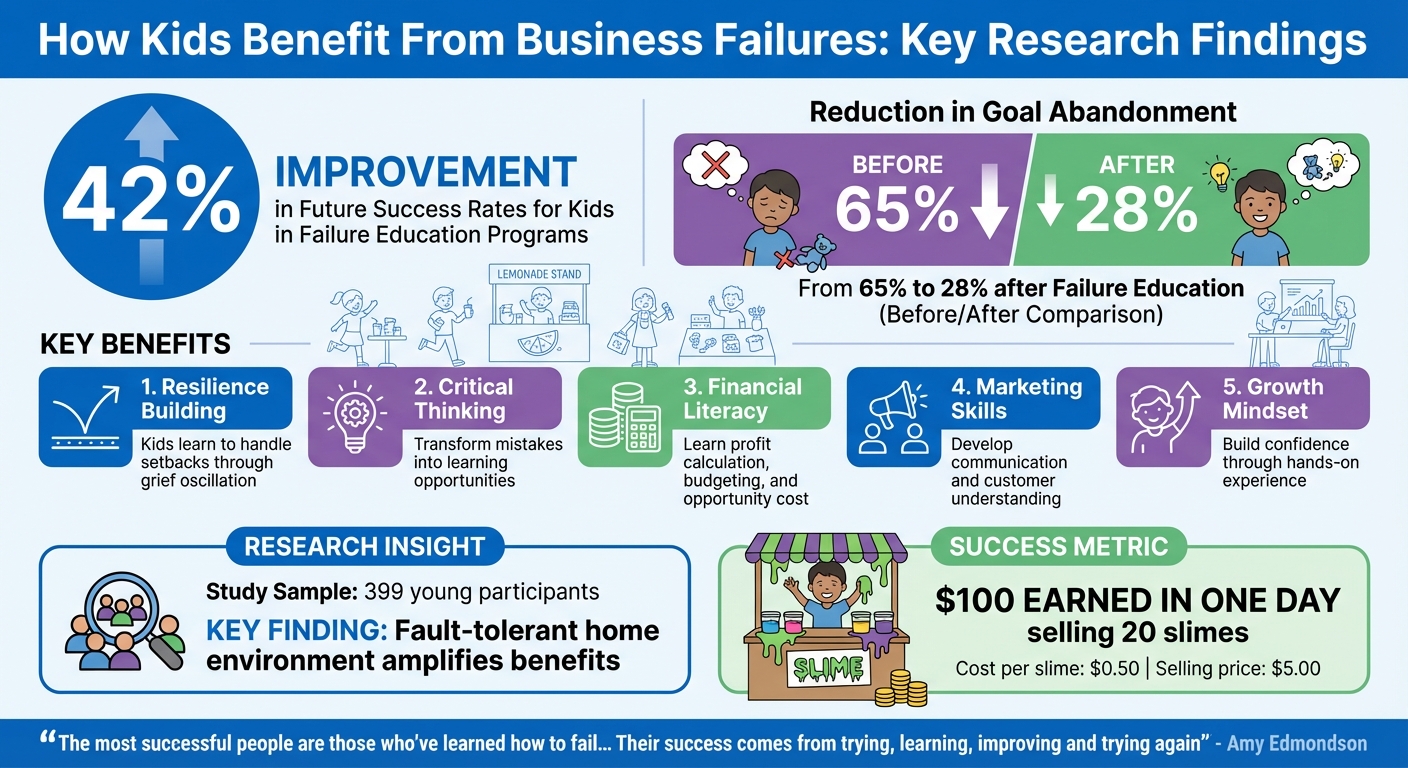
How Business Failure Education Benefits Kids: Key Statistics and Outcomes
What Research Shows About Failure and Child Development
How Failure Builds Resilience
When children face setbacks in their entrepreneurial efforts, they develop the mental toughness needed to recover from disappointment. Research highlights that kids in Entrepreneurial Failure Education programs learn to handle setbacks through a process called grief oscillation. This involves managing tough emotions while also identifying valuable lessons from the experience.
Developing Critical Thinking and Problem-Solving
Setbacks encourage kids to question old habits and rethink their strategies. For example, when a slime business doesn’t sell well or a marketing idea fails, children naturally start turning their mistakes into learning opportunities for the future.
This process also helps kids better understand their strengths and identify specific ways to improve. Instead of just feeling frustrated, they begin analyzing what went wrong - like setting prices too high or choosing a poor sales location. This shift toward analysis not only strengthens problem-solving skills but also builds confidence through practical learning and experience.
Building Confidence and a Growth Mindset
Working through business challenges gives children a sense of achievement that traditional education often overlooks. Whether it’s refining their sales pitch or redesigning a product, kids develop a persistent drive to keep going, even when risks are involved.
Hands-on experiences offer immediate lessons. For instance, in September 2025, a child using the My Lil Startup kit learned to count change and tailor product designs to customer preferences by "thinking what designs others might like." This experience significantly boosted the child’s confidence. Meera Nair, a parent, shared her observation:
"I could see his confidence boosting with each sale he made".
These real-world activities show kids that their ideas matter, helping them develop a growth mindset that values effort and learning over immediate success.
Mistakes, Not Failure: Helping Kids Build Identity and Resilience
How Business Failures Teach Practical Skills
Business failures go beyond just building resilience and sharpening critical thinking - they also provide invaluable lessons in practical financial and marketing skills. Small ventures like running a lemonade stand or selling homemade slime give kids a front-row seat to the financial realities of running a business. These experiences offer something that textbooks can't: real-world consequences. For example, if a child spends $20 on supplies and earns $35, they learn how to calculate a $15 profit. On the flip side, overspending on extras like decorations or mispricing their products teaches them the difference between revenue and profit. These small but impactful lessons turn mistakes into real-world business know-how.
Learning Financial Literacy and Money Management
When a business doesn't go as planned, kids are forced to take a closer look at their spending and learn important concepts like opportunity cost. Opportunity cost is the understanding that choosing to spend money on one thing means giving up the chance to spend it on something else. For instance, if a child spends too much on fancy packaging that fails to attract customers, they experience firsthand how poor spending decisions can hurt their bottom line.
Tracking income and expenses over time - whether in a simple notebook or on a spreadsheet - teaches young entrepreneurs to spot trends. Maybe they notice that lowering prices boosts sales but cuts into profits, or that stocking up on educational kits and supplies during busy seasons increases overall earnings. These tools help them identify the actual reasons behind setbacks instead of chalking it up to bad luck. Similarly, when kids adjust their marketing strategies or rethink how they allocate resources, they’re developing practical skills that will serve them well in any business endeavor.
Developing Marketing and Communication Skills
Early marketing missteps - like creating unappealing flyers or delivering pitches that don't resonate - offer kids a chance to improve their communication and marketing techniques. Take a slime business, for example: if the initial focus is on technical details but customers are drawn to vibrant, fun themes, kids quickly learn to shift their messaging to better align with what their audience wants.
Interacting directly with customers also helps young entrepreneurs understand that success comes from truly listening to buyer preferences, not just assuming what will work. By figuring out which materials or strategies grab attention and incorporating customer feedback into their approach, kids learn that refining their efforts is key to achieving their goals. These lessons in adaptability and active listening are foundational for long-term success in any venture.
How Parents Can Guide Kids Through Business Failures
Parents can turn business setbacks into powerful learning opportunities. By fostering an environment where failure is seen as a natural part of growth, they encourage kids to take calculated risks and step out of their comfort zones.
Creating a Safe Space for Failure
Start by creating a supportive atmosphere that values effort and creativity over just the results.
This mindset helps kids feel comfortable experimenting, knowing their worth isn’t tied to the success of every business idea or marketing attempt.
Parents also need to manage their own reactions to setbacks. Overprotecting kids from minor failures can actually increase anxiety and undermine confidence. Instead of rushing to fix every problem, take a moment to evaluate the situation. When the risks are low and the lessons are valuable, stepping back allows children to build the decision-making skills they’ll need for bigger challenges later on.
Teaching Reflection and Problem-Solving
Once a safe space is in place, help kids reflect on their experiences to uncover lessons. Professor Amy Edmondson, an expert in organizational learning, highlights the importance of identifying different types of failure. She points out that "intelligent failures" - those that stem from thoughtful risks taken in pursuit of a goal - offer the greatest learning opportunities. For instance, if a child’s slime business isn’t drawing customers despite their best efforts, parents can guide them to analyze what went wrong and brainstorm ways to improve.
The way parents talk about these failures matters, too. Instead of focusing only on successful outcomes with phrases like "You did great!", use process-focused feedback such as "Good try!" or "You made great progress!". This reinforces the idea that effort, strategy, and persistence are the real keys to improvement. By reframing failures - like a rejected idea or a failed sale - as stepping stones to future achievements, parents can help their kids develop resilience, problem-solving skills, and a mindset geared toward growth.
Learning Through the My Lil Startup Slime Business Kit
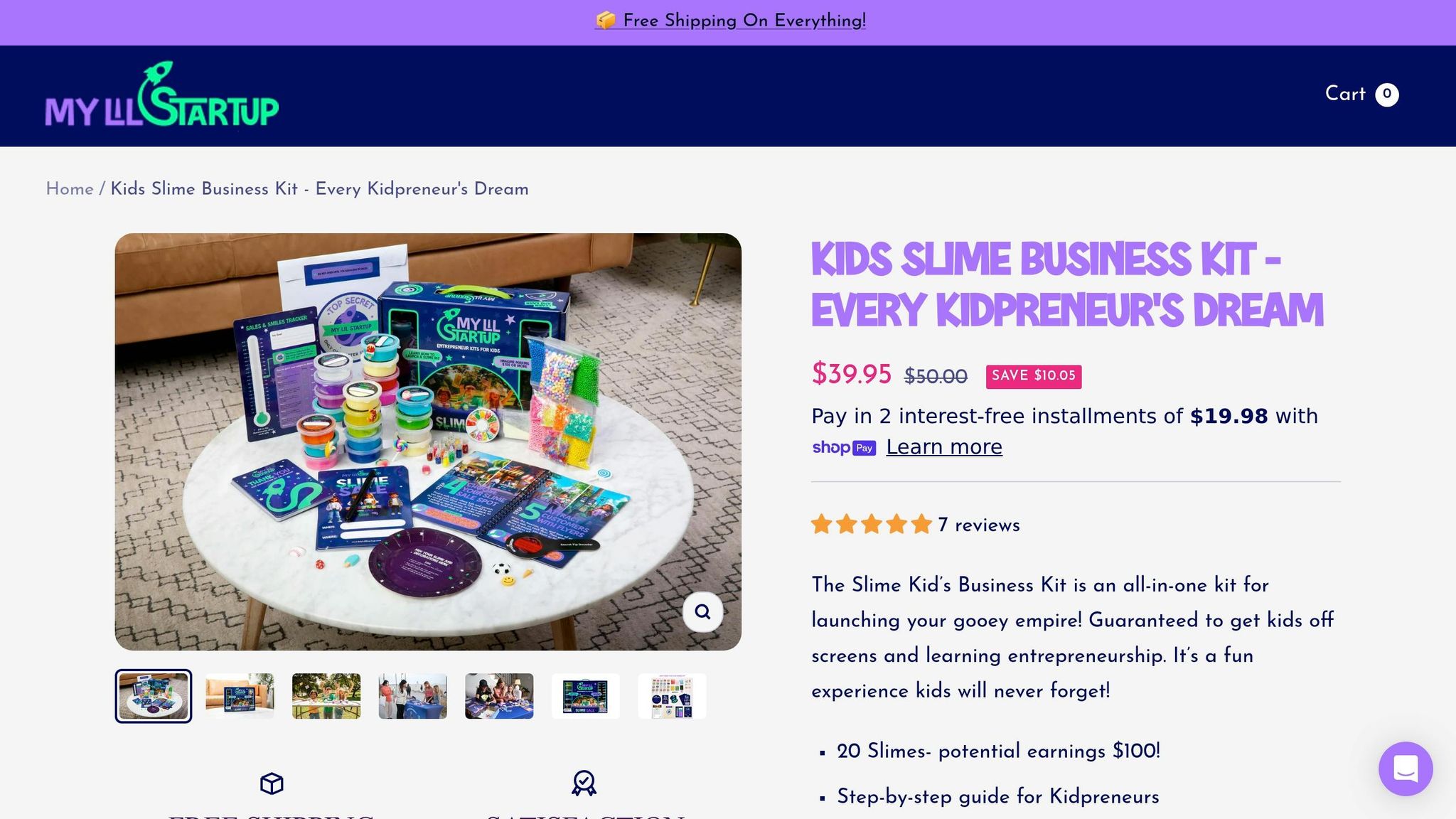
The My Lil Startup Slime Business Kit takes entrepreneurial lessons off the page and into real life. Packed with 20 pre-made slimes, marketing flyers, thank-you cards, and a sales tracker, this kit gives kids an opportunity to run their own business while learning how to handle challenges and setbacks.
Building Resilience with Sales Tracking
The sales tracker included in the kit is a simple yet powerful tool for teaching kids how to analyze their business performance. For example, a child might notice they sold only five slimes on Saturday but managed to sell 15 on Sunday. This could highlight the importance of timing or even suggest that weekend sales are stronger. They might also discover that glow-in-the-dark slime is a crowd favorite compared to standard options. By spotting patterns and trends, kids can adjust their approach - like trying a new sales location or focusing on their best-selling products.
Growing Creativity and Confidence with Marketing Tools
The kit’s marketing materials, such as flyers and thank-you cards, provide a platform for kids to test and refine their selling strategies. A child might create a flyer that doesn’t attract much attention, only to redesign it later with a focus on specific features like "glow-in-the-dark slime", which could lead to better results. As one parent, Kaci, shared, her son "set up his business and learned social skills and financial basics through hands-on marketing adjustments". These trial-and-error moments show kids that even marketing missteps can be stepping stones for improvement, helping them build confidence and develop creative problem-solving skills.
Practicing Financial Management
The kit also introduces kids to financial basics. They learn to calculate costs (like $0.50 per slime for materials), track revenue (selling each slime for $5), and determine their profits using the sales tracker. The goal? To earn $100 from selling 20 slimes - a target many kids hit in just one day. When some inventory doesn’t sell as planned, they experience firsthand the financial impact of unsold items, gaining an early understanding of planning and budgeting. The kit comes in three tiers - Starter Kit ($39.95), Growth Bundle ($59.95), and Mogul Bundle ($99.99) - each offering different resources. These options help kids learn about reinvesting profits and scaling their business as they grow from managing small sales to handling larger inventories with refill kits.
Conclusion
Failure can be one of the best teachers. Studies show that when kids face challenges in low-pressure situations, they develop the resilience and judgment needed to grow into confident, adventurous adults. The trick is to shift the perspective on failure - from something to fear to something to learn from. Success is about trying, learning, and trying again.
Research backs this up, and tools designed for hands-on learning make the process even more effective. Amy Edmondson, a prominent researcher in the field of failure and learning, sums it up perfectly:
"The most successful people are those who've learned how to fail... Their success comes from trying, learning, improving and trying again - not from initial perfection".
My Lil Startup's Slime Business Kit creates the perfect environment for kids to turn mistakes into stepping stones. With tools like sales trackers, marketing templates, and real-world financial management activities, kids aged 6 to 12 can experiment, adapt, and grow. Whether they're figuring out the best sales spot, tweaking a flyer design, or managing inventory, every challenge becomes an opportunity to sharpen their critical thinking and problem-solving abilities.
Parents play a key role here, too. By focusing on effort rather than just results, encouraging calculated risks, and guiding kids to reflect on setbacks, they help build a growth mindset. Pairing this supportive approach with the Slime Business Kit - offered in bundles priced between $39.95 and $99.99 - provides kids with the tools and confidence to turn failures into valuable lessons. It’s not just about earning money; it’s about gaining skills and having fun along the way. This combination sets the stage for kids to embrace challenges and grow into future entrepreneurs.
FAQs
What’s the best way to help my kid handle a business setback?
Encourage your child to view setbacks as chances to grow and learn. Work with them to figure out what didn’t go as planned, seek out constructive feedback, and brainstorm new approaches. This helps build resilience, sharpens problem-solving skills, and nurtures a growth mindset. By focusing on persistence and boosting their confidence, you can help them turn failures into stepping stones for future success.
How do I tell a smart risk from an avoidable mistake?
Taking a smart risk means thinking things through - planning carefully, considering possible outcomes, and using the experience to grow. On the flip side, an avoidable mistake often comes from acting impulsively or skipping preparation. By teaching kids to evaluate their choices, predict potential hurdles, and reflect on what happens afterward, they can develop resilience. This process helps them understand the difference between risks that lead to growth and errors that could have been prevented, especially in entrepreneurial ventures.
How can I teach money basics without making it stressful?
Learning about money doesn’t have to be dull or overwhelming - it can actually be fun! Hands-on activities, like small business projects, are a great way to teach kids about financial concepts. For instance, a slime business using a kit like My Lil Startup can help kids learn to track sales, manage expenses, and calculate profits - all while having a blast.
Make sure to highlight that setbacks are a normal part of the process and encourage kids to focus on their progress and effort. Real-life experiences, such as running a lemonade stand or selling handmade crafts, can make these lessons stick and keep the learning exciting.