

Teaching kids about money early builds habits that can last a lifetime. Here's the key takeaway: start simple, make it hands-on, and tailor lessons to their age. Whether it's identifying coins, setting savings goals, or running a small business, these skills prepare kids for smarter financial decisions as adults.
Key Points:
- Start Early: Kids form money habits by age 7.
- Make It Hands-On: Use real-life activities like grocery shopping or setting up a lemonade stand.
- Age-Appropriate Lessons: Younger kids learn through play; older kids benefit from budgeting and entrepreneurial tasks.
- Teach Needs vs. Wants: Help kids prioritize essentials and avoid impulse purchases.
- Encourage Earning: Chores, small jobs, or kid-friendly businesses connect effort to income.
- Savings First: Introduce the "10% rule" to build a habit of saving.
These steps ensure kids understand how to earn, save, and spend responsibly, setting them up for long-term financial success.
Money Basics Every Kid Should Know
What Money Is and How It Works
Money is essentially a tool that connects the effort we put into work with the goods and services we want or need. Every time a dollar is spent, it reflects a choice. As the Consumer Financial Protection Bureau puts it:
You need money to buy things, and you earn money by working.
This basic explanation helps kids grasp that money doesn’t just appear - it has to be earned.
The big takeaway here is that money is limited. Spending uses up funds immediately, while saving allows for future purchases. Credit cards, which might seem magical to kids, are simply promises to pay back money later.
To make these concepts real, let kids handle cash. For example, let them perform small transactions so they can physically see how money is exchanged. Using a clear jar for savings is another great idea; as they add money, they can visually track their progress. These hands-on activities transform abstract ideas into lessons they can see and touch.
Once kids understand the basics of money, the next step is teaching them how to identify the coins and bills they’ll encounter in daily life.
Identifying U.S. Coins and Bills
Even toddlers as young as 2 or 3 can begin learning the names of coins, even if they don’t yet understand their value. Start with fun, hands-on activities: trace the outlines of coins on paper and let your child match real coins to the shapes. This helps them recognize the unique features of pennies, nickels, dimes, and quarters.
Once they’ve mastered the names, it’s time to teach value. Set up a pretend store at home with items like fruit or cereal boxes, and let your child “buy” them using play money. Dorothy Singer, Ed.D., Senior Research Scientist at Yale University, explains:
By exchanging play money for goods, your child begins to understand the basics of commerce.
Practice in real-life scenarios is even better. Author Jayne A. Pearl suggests:
Turn your day-to-day activities into learning experiences.
For example, let your child count the earnings from a lemonade stand or small chore-based business. The United States Mint website also offers free games and cartoons to make learning about currency fun. Starting a coin collection - like gathering state quarters - can keep kids interested in physical money while teaching them its significance.
Once they can identify and value money, the next step is helping them understand how to use it wisely by distinguishing between needs and wants.
The Difference Between Needs and Wants
Needs are the essentials - things like food, water, shelter, and basic clothing. Wants, on the other hand, are extras that bring enjoyment, such as toys, candy, or luxury items. Understanding this difference is key to making smart choices about spending and saving. Teaching kids about opportunity cost - how choosing one thing often means giving up another - can help them learn to manage their limited resources.
Grocery shopping is a great way to illustrate this concept. Point out the difference between essentials like bread and milk versus extras like soda. If your child wants a toy that isn’t for a special occasion, let them use their own allowance to buy it. This makes the decision personal and reinforces the value of money.
For older kids, try introducing the “two-week pause” rule: wait 14 days before making a big purchase to decide if it’s a true need or just a passing want. Financial experts also suggest that teens save at least 10% of their income, helping them build the habit of prioritizing needs over wants. A common allowance guideline is $1 to $2 per week for each year of age, giving kids a steady amount to practice budgeting and decision-making.
Financial Literacy for Kids | Learn the basics of finance and budgeting
Teaching Money Skills by Age Group
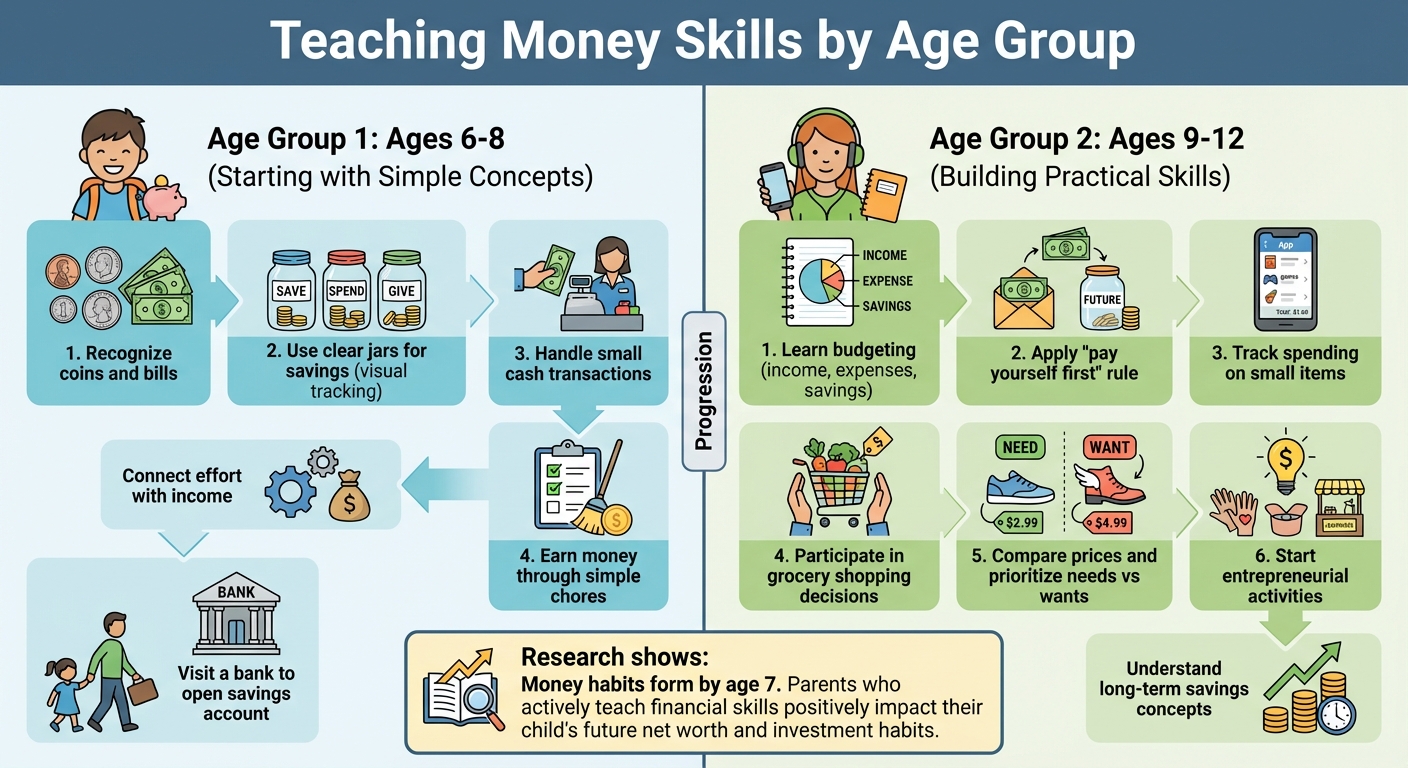
Age-Appropriate Money Skills: Teaching Kids Financial Literacy from Ages 6-12
Teaching kids about money requires tailoring lessons to their age and understanding. What clicks for a six-year-old might not work for a twelve-year-old. Research even shows that when parents actively teach financial skills, it can positively impact a child's future net worth and investment habits.
Ages 6–8: Starting with Simple Concepts
Kids in this age group are just beginning to understand money. The goal is to make learning fun and relatable through hands-on experiences.
Start by helping them recognize coins and bills. Using clear jars for savings can visually show how money grows over time. As Jayne A. Pearl notes:
"As soon as your child is receiving an allowance, he'll need a place to put his money".
Take it a step further by involving them in small cash transactions. Whether it’s buying a snack or paying for a small toy, these moments build confidence in handling money. Visiting a bank to open a savings account can also be a big milestone, helping children feel "grown up" while they learn how banks work and how interest helps their money grow.
You can also introduce the idea of earning money through simple tasks like household chores or a weekly allowance. This helps them connect effort with income - a valuable lesson they’ll carry forward.
Once they’ve got the basics down, they’ll be ready to tackle more advanced skills like budgeting in the next stage.
Ages 9–12: Building Practical Skills
Older kids are ready to dive deeper into managing money. At this stage, the focus shifts from learning what money is to understanding how to use it wisely.
Introduce them to budgeting with categories like income, expenses, and savings. A simple but powerful habit to teach is the "pay yourself first" rule - setting aside part of their money for savings before spending on other things. Encourage them to track their spending on small items like snacks or toys to see where their money goes.
Get them involved in real-life financial decisions. A grocery shopping trip, for example, can teach them how to stick to a budget, prioritize needs over wants, and compare prices. The Consumer Financial Protection Bureau emphasizes the importance of mindful spending:
"Credit cards are convenient, and it's important to use them wisely. My personal rule is to use cash for anything under $20, to make sure small things don't add up to a big credit card bill".
Encourage entrepreneurial activities like selling handmade crafts or hosting a yard sale. These ventures teach negotiation skills and the value of money. For a more structured experience, tools like the Slime Business Kit from My Lil Startup (https://mylilstartup.com) offer an all-in-one package with products, marketing materials, and sales trackers. These hands-on projects make learning about budgeting, tracking expenses, and reinvesting profits both engaging and practical.
To round out their understanding, share age-appropriate insights about long-term savings. Reviewing college fund statements or discussing whether past purchases were worthwhile can help them develop thoughtful spending habits for the future.
How to Earn, Save, and Spend Money
Understanding how to earn, save, and spend money is a crucial life skill. Teaching children these basics early on helps them build habits that can last a lifetime. By connecting these practices to foundational money concepts, kids can develop a solid framework for managing their finances.
Ways Kids Can Earn Money
Kids can start earning money in ways that match their age and abilities. For younger children, ages 6–10, simple tasks like doing household chores, running a lemonade stand, or selling handmade crafts are great options. These activities not only teach responsibility but also give kids a sense of accomplishment.
As they grow older, middle schoolers (11–13) can take on more advanced jobs such as yard work, babysitting (which pays an average of $18.50 per hour in the U.S.), or even tutoring younger students. High schoolers (14–18) have even more opportunities, including part-time work, freelancing, or managing social media for local businesses.
For a fun and educational twist, kids can try the Slime Business Kit from My Lil Startup. This kit teaches essential skills like inventory management, customer service, and tracking profits. It includes everything needed to start a mini business: 20 pre-made slimes, marketing materials, thank-you cards, and a sales tracker.
Once kids start earning, the next step is learning how to save effectively.
Setting Savings Goals
Setting specific savings goals can help kids stay motivated. Younger children might aim for short-term goals, like saving up for a favorite toy or a special outing. These tangible objectives let them see quick results and feel rewarded for their efforts.
For younger kids, using clear jars to store savings provides a visual reminder of their progress. As they get older, teens can transition to digital tools like banking apps or debit cards. These tools let them track their balances in real time and work toward bigger goals, such as a bike, gaming console, or even a car.
Introduce the 10% rule early: encourage kids to save 10% of any money they earn before spending the rest. This habit instills the importance of saving as a priority. The FDIC highlights the role parents play in teaching financial skills:
Parents are the primary influence on a child's future financial well-being because they have many occasions to communicate information, set powerful examples, and involve children in activities that teach them financial skills.
Making Smart Spending Decisions
Teaching kids to spend wisely starts with helping them understand the difference between needs and wants. Use real-life situations to reinforce this concept. For example, encourage a 24-hour or one-week waiting period before making non-essential purchases. This pause helps kids avoid impulse buys and teaches the value of delayed gratification.
Comparison shopping is another valuable skill. During trips to the store, let kids evaluate price, quality, and value. You could even give them a small budget - like $10 for snack ingredients - and let them figure out how to stay within that limit.
Tracking spending is equally important. Have kids keep tabs on small purchases, such as snacks or apps, to see where their money goes. Periodically review their spending together and discuss whether those purchases were worthwhile. This reflection helps build thoughtful spending habits over time. Research shows that financial education during childhood is linked to lower debt, higher savings, and better credit scores in adulthood.
sbb-itb-a46f019
Learning Money Skills Through a Small Business
Running a small business is an excellent way for kids to build on basic money-handling skills. It gives them a chance to connect their efforts directly to financial rewards, understand business expenses, and manage money with purpose. This hands-on experience naturally introduces concepts like tracking income and expenses, making it a practical learning opportunity.
Getting Started with a Kid-Friendly Business
The best businesses for kids are simple, age-appropriate, and easy to grasp. For younger children (around 6–8 years old), ideas like hosting a bake sale, dog sitting, or selling handmade crafts are great starting points. As they grow, they can tackle more advanced projects. For example, in February 2025, a 12-year-old entrepreneur transitioned from a lemonade stand to selling handmade goods online. She reinvested half of her $200 earnings into supplies and a card reader to expand her business.
To make the process smoother, tools like the Slime Business Kit from My Lil Startup are a great option. This kit provides essentials like pre-made slimes, marketing flyers, thank-you cards, and a sales tracker, allowing kids to focus on learning the basics of running a business without worrying about setup hurdles.
Parents should encourage their kids to take charge while providing guidance and resources. Tiffany Nieslanik, who supported her daughter’s business journey, highlights this balance:
True support isn't about removing obstacles - it's about giving her the confidence to navigate them herself.
Once the business is operational, the next step is keeping a close eye on finances.
Keeping Track of Income and Expenses
Tracking finances is where kids learn the difference between gross income and actual profit. They begin to understand the impact of expenses like materials, shipping costs, and even sales tax.
Starting with simple tools is key. The sales tracker included in the Slime Business Kit helps kids log every transaction and monitor their earnings. Older kids can graduate to using mobile apps or spreadsheets to track both income and expenses.
Unexpected costs often provide the most valuable lessons. For instance, the 12-year-old entrepreneur mentioned earlier had to adjust her website’s shipping setup after an expensive international order to Canada. This experience taught her the importance of accounting for customs forms and accurate postal fees. These real-world challenges help kids grasp pricing strategies and the importance of sustainability in business.
To reinforce financial discipline, set aside time for regular reviews. Weekly or monthly check-ins can include questions like, "How much did you earn this week?" or "What were your expenses?" This habit of reviewing cash flow builds long-term money management skills.
Using Profits to Grow the Business
Once kids start making a profit, they face an important choice: spend it now or reinvest to grow their business. This decision is where deeper financial literacy takes root.
A helpful guideline is the 50/50 rule - reinvest half of the earnings back into the business while saving or spending the remaining half. Reinvestment might involve upgrading supplies, purchasing tools like a card reader, or expanding the product line.
Chris Kawashima, a financial planner at Charles Schwab, sheds light on this:
The first thing that you want to instill into young people is the value of money. Even small amounts of money can give them some freedom, but money can also bring a sense of responsibility - they have to live with how they spend their money.
For those using the Slime Business Kit, reinvesting profits could mean upgrading to the Mogul Bundle ($99.95), which includes refills for 40 additional slimes. This teaches kids how reinvesting can expand their inventory and boost future earnings. Studies show that early financial education is linked to lower debt, higher savings, and better credit scores in adulthood.
| Business Stage | Key Learning Objective | Practical Activity |
|---|---|---|
| Startup | Understanding Costs | Researching material prices and setting prices |
| Operations | Marketing & Sales | Setting up a booth or building a simple website |
| Management | Financial Literacy | Using a sales tracker and calculating sales tax |
| Growth | Reinvestment | Buying equipment (e.g., card reader) to improve efficiency |
As Tiffany Nieslanik wisely says:
Entrepreneurship isn't about perfection; it's about learning and adapting.
From setting prices to reinvesting profits, every decision helps kids develop confidence and lifelong money skills.
Teaching by Example: What Parents Can Do
Parents have a huge influence on their kids' financial habits. Research shows that children primarily learn how to handle money by observing their parents - how they earn, spend, save, and even borrow. This means your everyday financial decisions, like comparing prices at the store or explaining why you're waiting for a sale, can become valuable lessons for your kids.
The Consumer Financial Protection Bureau highlights a simple but effective strategy:
When you think out loud, you clarify what you're doing and why. Try getting into the habit of thinking out loud during your day-to-day money and time management, so your kids can follow along.
By narrating your financial decisions, you help your children avoid drawing the wrong conclusions. For instance, instead of silently swiping your card or checking your phone at the store, you can explain what you're doing and why. These small, everyday actions help reinforce the financial principles you want to teach.
Using Daily Activities as Teaching Moments
Everyday tasks, like grocery shopping, offer great opportunities to teach kids about money. Jayne A. Pearl, author of Kids and Money, suggests turning routine errands into lessons. For example, involve your child in clipping coupons, comparing unit prices, or deciding if a brand-name product is worth the extra cost. A fun exercise could be buying a name-brand item one week and a generic version the next, then discussing whether the quality difference justifies the price.
Pearl also uses what she calls the "potatoes and gravy game" to explain spending priorities:
I call it the potatoes and gravy game. Potatoes are food we need to survive. The gravy makes it taste better but isn't necessary.
Even a trip to the ATM can be a teaching moment. Show your child how the plastic card connects to real work and a limited bank account. Explain why you avoid ATMs with fees and, for younger kids, start with physical coins and bills. Tangible money helps them understand the concept of exchange before moving on to digital transactions.
These hands-on lessons can make more abstract financial concepts easier to grasp.
How Different Payment Methods Work
Teaching kids about various payment methods helps them understand how money flows in everyday life. Start with cash, as it's the most straightforward. Physical bills disappearing when spent makes budgeting feel more real.
Once they understand cash, introduce debit cards. Explain that a debit card works like an electronic check, pulling money directly from your bank account. Show them your account balance before and after a purchase so they can see the immediate impact. Stress that a debit card only works if there's money in the account.
Credit cards are a bit trickier. The Consumer Financial Protection Bureau suggests explaining it like this:
Buying something with a credit card might not look like I'm spending money, but I am. I'm making a promise to pay my credit card bill later, and I have to keep my promise.
To make this tangible, you could try a "micro-loan" exercise. If your child wants a treat, offer to buy it with your credit card but require them to pay you back from their allowance right away.
Here's a quick breakdown of common payment methods:
| Payment Method | What It Means | How to Explain It |
|---|---|---|
| Cash | Physical money you own | "Spent money disappears from your wallet." |
| Debit Card | Electronic access to your bank account | "It uses money you already have in the bank." |
| Credit Card | Borrowed money that must be repaid | "It's a loan from the bank that you promise to pay back." |
Don't forget to show them how to write a check. While it might seem outdated, it's still useful for situations like paying rent or small service providers. The goal is to help your kids understand that whether they're using cash, a card, or digital payments, it's all real money - and comes with real responsibility.
Conclusion
Teaching kids the basics of money management doesn’t have to be complicated. Studies reveal that many money habits are formed by the time children turn 7. Providing hands-on opportunities to manage money can give kids the confidence and skills they’ll need for future financial success. As Ashley LeBaron-Black, an assistant professor at BYU, highlights:
Actual hands-on experience with money was tied so strongly to kids' future financial self-efficacy - to all kinds of financial outcomes we want them to have later in life.
Building on these early habits, tools like My Lil Startup's Slime Business Kit can help reinforce valuable lessons. When kids earn money, track their spending, and make decisions about saving and investing, abstract concepts become practical skills. They begin to understand that money isn’t just numbers on a screen - it’s something they can control through their choices and effort.
Parents are key players in this learning process. The Consumer Financial Protection Bureau reminds parents:
It's not too early - or too late! See how to adapt the conversation to where your child is, developmentally.
Whether your child is 6 or 12, every discussion about comparing prices, every decision about saving for a goal, and every small entrepreneurial endeavor builds their financial confidence. Using simple systems like "give, save, spend" for allowances, encouraging them to learn from small mistakes, and celebrating their achievements - like reaching a savings milestone or running their first business - can make a big difference.
Financial literacy isn’t a one-time lesson; it’s a skill that grows stronger with practice and guidance. Through everyday conversations and hands-on projects, kids can develop the confidence to manage money wisely for years to come.
Kidpreneur gift that teaches money basics (ages 6-12)
Parents shopping for a kidpreneur gift that teaches money basics usually want more than a coin jar or another allowance chart. Ages 6-12 learn needs vs wants, earning, and saving faster when they price something, talk to a customer, and count cash with a parent nearby. A lecture teaches words. A first sale teaches the habit.
My Lil Startup is that gift path. The Kids Slime Business Kit puts sell-ready inventory plus flyers, thank-you cards, and a sales tracker in one box. Slime is the product kids customize. The money basics are pricing, selling, and tracking. Starter $39.95. Ages 6-12.
Gift check for money basics (honest, not a ranking):
- After they open it, can they practice a real sale this weekend with a parent nearby?
- Does the gift include a way to track money in and money out, or only a story about money?
- Sales example (not a promise): 20 slimes at $5 each = $100 in sales. That is sales, not profit, and not an hourly wage.
What kidpreneur gift teaches money basics for ages 6-12?
A kit they can open and run a first sale with, not only a workbook. Look for inventory plus sell tools so kids practice price, customer talk, and cash counting. The Kids Slime Business Kit is built for that: 20 slimes to customize, flyers, thank-you cards, and a sales tracker. Starter $39.95. Ages 6-12. We do not claim to be the best money gift of 2026.
Can kids learn money basics by making a first weekend sale?
Yes, when the weekend ends with a customer and numbers to review. Kids see that money is earned, that prices must cover costs, and that sales is not the same as profit. Unbox Friday, customize a few items, sell Saturday with a parent nearby, then log the day. Starter $39.95. Ages 6-12. This is practice, not a guaranteed payday.
Is a business kit better than an allowance lesson for teaching kids money?
They teach different parts. Allowance helps kids practice spend and save choices with money they already have. A kidpreneur kit adds earning from a customer. If the goal is money basics plus a first sale, inventory plus a sales tracker fits better than another chart alone. Slime is product proof. The lesson is the mini business. Starter $39.95. Ages 6-12. We are not trying to out-STEM KiwiCo.
FAQs
How can I teach kids about money in a fun and age-appropriate way?
Teaching kids about money doesn’t have to be boring - it can actually be a lot of fun when you match activities to their age and interests. For little ones (ages 2–5), start with the basics. Activities like playing "store" or "restaurant" can help introduce money concepts in a playful way. As they get older (ages 6–8), you can make lessons more practical by involving them in real-life tasks, like helping budget for groceries or saving up for something special they want.
For older kids and teens, hands-on experiences are a great way to teach. They might enjoy tracking profits from a small business idea or learning how to reinvest their earnings. These activities not only teach financial skills but also give them a taste of responsibility and independence.
To spark creativity and entrepreneurial thinking, you could even help them start a simple business. For instance, My Lil Startup offers kits that teach kids how to create and sell slime - a fun way to combine play with real-world money and business skills. The trick is to keep the activities interactive and age-appropriate, so kids stay engaged and learn valuable lessons about money without even realizing it.
What are some simple ways to help kids understand the difference between needs and wants?
One simple way to help kids understand the difference between needs and wants is by weaving it into everyday conversations and using real-life examples. For instance, explain that needs are the basics required for living and growing - like food, water, clothing, and a safe place to live. On the other hand, wants are the extras that make life fun or exciting, such as toys, gadgets, or the latest fashion.
Another effective approach is to involve kids in practical activities, like planning a shopping list or setting a budget. These tasks encourage them to pause and think: "Is this something we need, or just something we’d like to have?" It’s a hands-on way to teach smart financial habits while making the concept of needs versus wants more relatable. Plus, it lays the groundwork for mindful spending as they grow.
How can kids start their own small business and learn about money?
Kids can dive into the world of small business by tapping into their hobbies and turning them into money-making ventures. With a little guidance from parents, they can brainstorm ideas like selling handmade crafts, running a lemonade stand, or offering services such as pet sitting or yard work. These hands-on activities not only introduce them to the basics of earning and saving but also teach valuable skills in managing money.
For families seeking a more organized approach, tools like My Lil Startup offer entrepreneur kits tailored for kids aged 6-12. These kits come packed with essentials like marketing materials and sales trackers, making the process both fun and educational. Starting a business at a young age doesn’t just teach financial responsibility - it also nurtures confidence, sparks creativity, and encourages an entrepreneurial way of thinking.