

When kids team up with local businesses, they gain more than just a place to sell their products. These partnerships help young entrepreneurs learn real-world skills like managing money, negotiating, and communicating effectively. By connecting with community stores, kids can showcase their products to an existing customer base, creating opportunities for growth and learning.
Key Points:
- Skills Development: Kids learn about profit margins, inventory, and expense tracking.
- Community Connection: Builds relationships with local store owners and customers.
- Success Stories: Examples like Riley Kinnane-Petersen and Mikaila Ulmer show how starting small can lead to big achievements.
-
How to Get Started:
- Identify businesses that align with your product.
- Prepare a short, clear pitch with product samples.
- Negotiate terms like revenue sharing or promotional support.
- Marketing Tips: Use eye-catching displays, simple flyers, and personal stories to connect with customers.
This article explains how kids can approach local businesses, set up partnerships, and market their products effectively. It also highlights real examples of young entrepreneurs who turned small ideas into thriving ventures.
Why Local Businesses Make Good Partners for Young Entrepreneurs
The Value of Local Community Support
Local businesses stand out because they focus on personal relationships rather than just transactions. Matt Wilcox, President of Digital Payments at Fiserv, captures this sentiment perfectly:
"SMBs are the stores, coffee shops and restaurants that we grew up with and love. We know the owners and people who work there, fostering a personal connection beyond mere transactions."
This emphasis on connection is reflected in the numbers: 80% of small business owners include giving back to their local community as part of their mission, and 91% believe businesses should actively contribute to their communities. These businesses also play a massive role in the economy, employing almost half of the U.S. workforce and contributing about 43.5% of the nation's GDP. For young entrepreneurs, this means access to a network of businesses that are deeply rooted in and invested in their communities.
Local businesses are also more approachable when it comes to providing mentorship, workspace, or opportunities for pop-up sales. As Matthew Toren, Co-Founder of Kidpreneurs.org, explains:
"Investing in Kidpreneurs is an investment in the community's future prosperity and culture."
These close-knit ties between local businesses and their communities create a strong foundation for partnerships with young entrepreneurs, offering benefits that go beyond financial gains.
How Local Businesses Benefit from Working with Kids
For local businesses, collaborating with young entrepreneurs isn’t just about giving back - it’s also smart business. Supporting kids helps build goodwill and enhances their reputation in the community. In fact, consumers are 49% more likely to view a business favorably if it’s a member of the local chamber of commerce, and 80% are more likely to shop there in the future.
Beyond reputation, these partnerships can boost customer engagement. Hosting kid-run pop-up shops or featuring products made by young entrepreneurs creates buzz and draws in new visitors - especially families. Imagine a café teaming up with a young baker to offer unique desserts or a gift shop highlighting handmade crafts like those made with a kids slime business kit. These collaborations not only increase foot traffic but also help businesses establish a stronger, more engaging community presence.
sbb-itb-a46f019
The 9-year-old entrepreneur behind a successful popcorn company
How Kids Can Approach Local Businesses
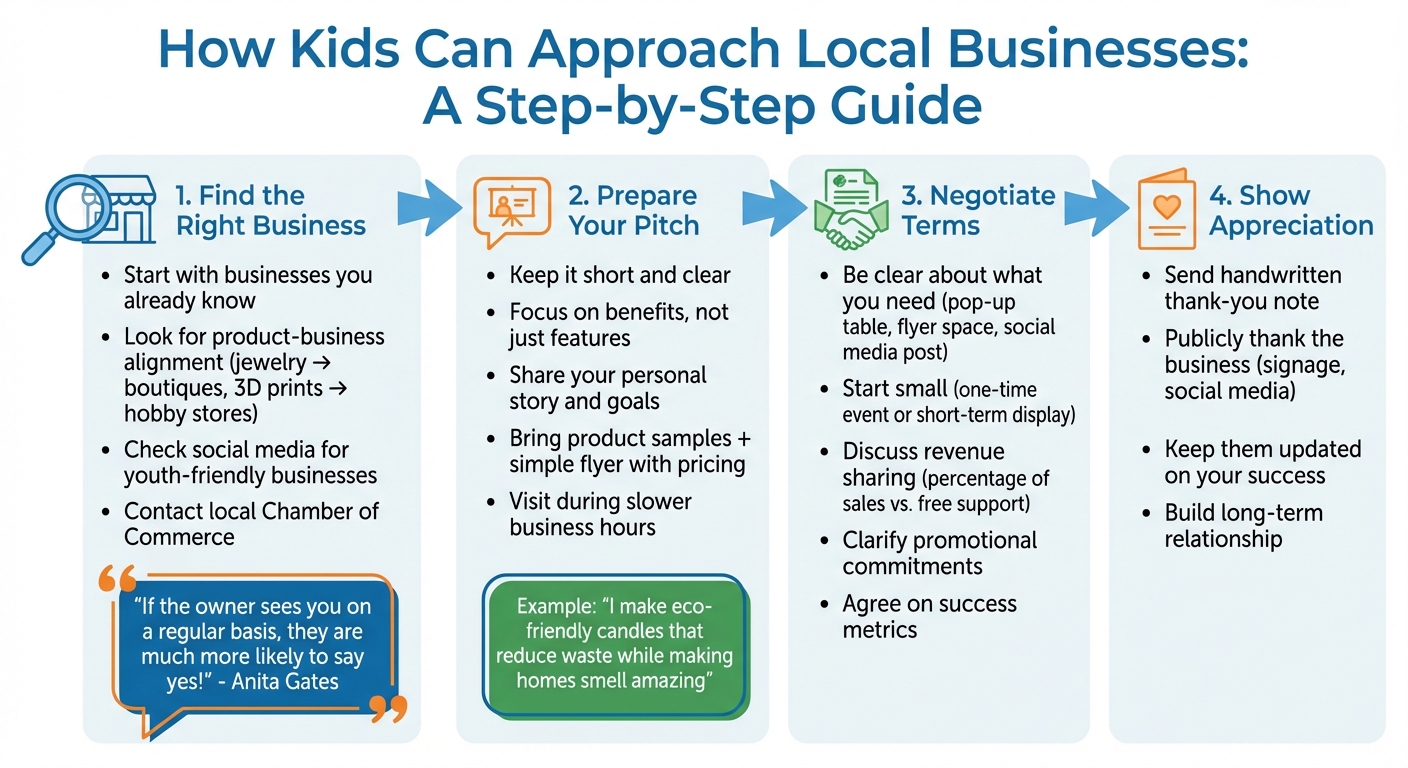
4-Step Guide for Kids to Partner with Local Businesses
Finding the Right Businesses to Partner With
Start by focusing on businesses your child already knows. As Anita Gates, Manager of Partnerships at Alex's Lemonade Stand Foundation, says:
"If the owner sees you on a regular basis, they are much more likely to say yes!"
Being a familiar face can make all the difference when starting a conversation about partnerships.
Look for businesses that align with your child’s product. For instance, handmade jewelry or soaps are a natural fit for local boutiques, while 3D-printed items might resonate with hobby stores as kid entrepreneurship evolves from cookies to crafts. If your child’s business revolves around slime (like products from My Lil Startup), consider pitching to gift shops, family-friendly cafes, or community centers where parents and kids often gather.
Do your homework on potential partners. Check out their social media pages - Instagram and Facebook are great places to see if they’ve worked with local creators or supported youth initiatives before. A visit to the business location can also help you spot opportunities, like an ideal spot for a product display. Additionally, reaching out to your local Chamber of Commerce or Main Street association can connect you with business owners who enjoy mentoring young entrepreneurs.
Once you’ve identified a good match, it’s time to prepare a pitch that emphasizes your child’s value.
Preparing a Simple Pitch
A good pitch is short, clear, and focused on the benefits. Instead of saying, "I sell candles", try something like, "I make eco-friendly candles that reduce waste while making homes smell amazing". This approach immediately highlights what makes the product special.
Sharing your child’s story can make the pitch more personal and engaging. Mentioning what inspired them or a specific goal - like saving for college or donating to a cause - can resonate with business owners. Adam Toren, Co-founder of Kidpreneurs.org, explains:
"A strong sales pitch clearly communicates the value of your product or service and persuades customers to buy."
Bring a finished product sample along with a simple flyer. The flyer should include pricing and one standout reason why customers will love the product. Timing is key - visit during slower hours when the owner has time to listen.
And remember:
"Whether you get the yes or you get a no, always say thank you!"
Following up with a handwritten thank-you note can leave a lasting impression and show professionalism. With the pitch complete, you can move on to discussing partnership details.
Negotiating Terms and Setting Up the Partnership
Be clear about what kind of support you’re asking for - whether it’s a pop-up table, a spot for flyers, or a shared social media post . Starting with a small commitment, like a one-time event or a short-term product display, can help build trust and make the partnership feel manageable.
Discuss how revenue will be handled. Some businesses might take a small percentage of sales in exchange for space, while others might offer support for free if they see the value in helping a young entrepreneur. If the business plans to promote your child’s products, clarify whether they’ll share posts on their social media accounts or include mentions in their newsletters.
Agree on specific terms and decide how success will be measured . Show appreciation by publicly thanking the business - this could be a sign at the display or a shout-out on social media. When both sides feel valued and see clear benefits, these partnerships can thrive.
How to Market and Sell Products in Local Businesses
Creating Eye-Catching Product Displays
When setting up a display, think about how to grab attention right away. Vertical arrangements, like using crates, tiered stands, or wall-mounted displays, help showcase products at eye level, making them more noticeable. For example, in September 2025, Esme Rogers-Evans, founder of Duxford Studios, cleverly used vertical wall space in her booth to display tools from her jewelry-making process. This sparked meaningful conversations with her customers.
Using the "rule of three" can also make your display more visually appealing. Group items in sets of three with varying heights to create balance. In March 2023, Bathu, a retailer, used this approach by arranging three fixtures at different heights against a minimal white background. The result? A clean, attention-grabbing focal point. Stick to a simple color palette - one main color with two or three accents - to avoid overwhelming the eye. In 2025, Snarki Studios nailed this by using a consistent pink theme across their booth signs, price lists, and packaging, reinforcing their brand identity.
Make your displays inviting and interactive. Full, well-organized setups encourage customers to touch or pick up items, boosting engagement. For practical tips, consider using a fitted sheet as a table cover - it stays in place and hides storage boxes underneath. Battery-operated lights can also spotlight your bestsellers and draw attention to key items.
With these thoughtful touches, your display becomes more than just a setup - it becomes a tool to attract and engage customers.
Using Promotional Tools to Drive Sales
A well-designed flyer can work wonders, but it needs to hit all the right notes. Start with a catchy headline that’s seven words or less, followed by a clear message, a call to action, and contact details. Since people’s attention spans average about 47 seconds, your flyer needs to grab interest fast. Keep it simple with one or two fonts and a cohesive color scheme for readability.
Blending offline and online marketing can amplify your efforts. Add QR codes to your flyers that link to social media profiles or exclusive offers. Share behind-the-scenes videos or product photos on local Facebook or Instagram groups to create a connection with potential customers. For example, My Lil Startup offers kits that include pre-designed marketing flyers and thank-you cards, making it easier for young entrepreneurs to promote their products.
When distributing flyers, think strategically. Place them on community boards in libraries or leave them on countertops at partner businesses. Before printing a large batch, always test one copy to ensure the margins and text are clear from a distance.
By combining visually appealing flyers with strategic placement, you can drive interest and foot traffic to your booth or store.
Engaging with Customers to Build Connections
Connecting with customers on a personal level can make all the difference. Share the story behind the business - what inspired your child to start it, or their goals, like saving for a special trip. This personal touch makes the interaction more memorable. Adam Toren, co-founder of Kidpreneurs.org, emphasizes:
"It's all about seeing the world through the customer's eyes, ensuring their product meets the audience's expectations and desires."
If your child feels shy, practice role-playing conversations to build confidence. A warm and friendly greeting, like “Hi! Want to try our slime?”, sets a welcoming tone and invites interaction. For wearable products like jewelry, having your child wear their creations acts as a walking advertisement.
Building a sense of community also helps strengthen loyalty. Simple loyalty programs, like punch cards offering a discount after five purchases, encourage repeat customers. If part of the proceeds supports a charity, make sure to highlight that with signs or in conversations - it’s a great way to connect with customers who value giving back.
Success Stories: Real Examples of Kid Entrepreneurs
Chloe's Slime Business and Community Partnerships
Chloe, an 11-year-old entrepreneur, discovered firsthand the power of collaboration with local businesses. Initially, her lemonade stand didn’t generate the buzz or income she had hoped for. With her dad Jon’s guidance, she compared starting a slime vs. lemonade stand and shifted gears. The results were incredible - she made over $100 in just one hour. This success sparked the creation of My Lil Startup's Slime Business Kit. The kit includes 20 pre-made slimes, decorations, marketing flyers, thank-you cards, and other essentials to help young entrepreneurs like Chloe kickstart their own slime businesses. Whether selling at neighborhood events, farmers' markets, or teaming up with local cafes and shops, this kit gives kids the tools to succeed with confidence.
Other Examples of Kid Entrepreneurs
Other young entrepreneurs have also shown how local partnerships can fuel amazing success stories.
Sydney Stark turned her slime business into a thriving venture by teaming up with local businesses. In November 2025, the 9-year-old founder of Slimes By Sydney partnered with Kidz Toys in Levittown, NY, to host a "K-Pop Slime Event." She created a special K-Pop-themed slime that was exclusively available at the event. The demand was so high that three time slots were added, and there was still a waitlist of over 40 participants. Within just six months, Sydney's business hit five-figure sales numbers. Christina, the owner of Kidz Toys, expressed her support:
"I love to support local kid entrepreneurs... The fact that there is like an outlet where she can come and do something like this, I think is a big deal for kids".
Mikaila Ulmer made waves when she signed a regional deal with Whole Foods Market in March 2016 to stock her "BeeSweet Lemonade" (now called Me & The Bees) in 55 stores across Texas, Arkansas, Louisiana, and Oklahoma. Her use of local honey to support bee populations aligned perfectly with Whole Foods' values, strengthening community trust and boosting her brand's appeal.
Jack Bonneau took a more hands-on approach by setting up a network of lemonade stands at farmers' markets in Colorado, including Erie, Lafayette, Louisville, and Westminster. By July 2015, his stand in Westminster alone was earning between $100 and $200 weekly. Jack didn’t stop there - he also supported fellow kid entrepreneurs by offering shelf space for their products, such as "Oli-Bo-Bolly" dolls and "Sweet Bee Sisters" skin care.
Sophia Chapman, the middle school founder of the Kansas City Slime Company, built a stellar reputation on Etsy, earning a 5-star rating while personally managing all customer interactions. Her father, Kit Chapman, highlighted the life lessons she gained:
"It's been a great way to learn about business and that you can't just spend all of your money because you have to buy more supplies".
Sophia shared her own advice for budding entrepreneurs:
"Don't be embarrassed about what you're selling if you're passionate about it. It doesn't matter what other people think, as long as it works for you".
Conclusion
Working with local businesses offers young entrepreneurs more than just a chance to earn money - it helps them develop crucial life skills like communication, problem-solving, and financial literacy. It also strengthens their connection to the community. As Matthew Toren, author and founder of Kidpreneurs.org, says:
"Investing in Kidpreneurs is an investment in the community's future prosperity and culture."
Parents play a vital role in turning a child’s entrepreneurial ideas into reality. By helping create a simple business plan, practicing pitches during "family test days", or setting up a youth savings account to manage earnings, parents provide hands-on lessons that go far beyond what traditional learning materials can offer.
Dayna Winter from Shopify highlights how entrepreneurship bridges the gap between theoretical learning and practical application:
"A child who struggles with workbook exercises might connect with math and reading through building a website or managing inventory."
Whether it’s selling homemade slime at a local café or running a booth at a farmers' market, kids gain hands-on experience in managing money, calculating profits, and delivering consistent service.
Programs like My Lil Startup's Slime Business Kit make it easier for kids aged 6–12 to take their first steps into entrepreneurship. With tools like pre-made slimes, marketing materials, and thank-you cards, these kits provide everything needed to launch a small business confidently.
Starting small and leaning on community support teaches kids skills that last a lifetime. Resilience, financial know-how, and a sense of belonging are just a few of the benefits. These partnerships not only boost sales but also nurture the entrepreneurial spirit that can shape their future.
FAQs
What should we bring when pitching a store owner?
When approaching a store owner, come prepared with a polished sales pitch. Clearly explain what your product or service offers and how it can benefit their business. To make an even stronger impression, bring along a simple marketing idea or a flyer that could help draw in customers. This not only demonstrates your professionalism but also makes it easier for the store owner to see the potential value your product could bring to their store.
How do we set a fair revenue split with a local business?
To create a fair revenue-sharing arrangement with a local business, it’s crucial to decide on either a percentage-based split or a fixed amount that accurately represents the contributions and responsibilities of each party. Transparency in these terms helps build trust and encourages collaboration. Open and honest communication is essential for forming a partnership that benefits both sides equally.
How can a shy kid sell confidently in a shop or pop-up?
A child who tends to be shy can start building confidence by engaging in low-pressure interactions. For instance, they could begin by selling to family members or close friends, which provides a safe and supportive environment. Practicing their pitch at home or in other familiar settings can also make a big difference. Role-playing with parents or mentors is another great way to rehearse and prepare for real-life scenarios.
As they grow more comfortable, gradually introducing them to public sales situations can help them ease into more challenging interactions. Setting small, achievable goals along the way and celebrating their accomplishments - no matter how small - can boost their confidence and encourage them to take on bigger challenges over time.