
Business goal planning helps kids turn their ideas into actionable steps, teaching them life skills like decision-making, money management, and time organization. For example, instead of saying "I want to sell slime", a child can set a clear goal like "sell 20 jars of slime for $5 each by next Saturday." This structured approach builds confidence and makes big dreams feel manageable.
Key Takeaways:
- Choose a business idea based on interests (e.g., crafts, baking).
- Use SMART goals: Specific, Measurable, Achievable, Relevant, Time-bound.
- Break big goals into smaller tasks (e.g., make, market, sell).
- Track progress with tools like sales trackers to adjust strategies.
- Reinforce learning through hands-on experience, like using kits with pre-made supplies.
Teaching kids to plan and achieve goals equips them with practical skills for future success while making the process fun and rewarding.
Step 1: Coming Up with Business Ideas and First Goals
Picking the Right Business Idea
Start by focusing on what kids already love doing. A child who enjoys making crafts might find success selling slime or friendship bracelets, while a young baking enthusiast could turn their passion into a cookie or cupcake business. Matching the business idea to something they’re both skilled at and excited about is key - it keeps them motivated when things get tricky.
Parents can help spark ideas by using tools like mind mapping. For example, jot down hobbies like drawing, baking, or crafting, and then explore how those interests could translate into a small business. A short walk around the neighborhood can also uncover local needs or opportunities. These simple steps can turn a fun activity into a real business venture.
When narrowing down ideas, focus on three essentials: low startup costs (think lemonade stands that only need $10-20 in supplies), easy execution (nothing overly complicated for a beginner), and local demand (friends, family, and neighbors make great first customers). For instance, the My Lil Startup Slime Business Kit is a great option for craft-loving kids. It includes everything they need - 20 pre-made slimes, fun decorations like glitter and charms, marketing flyers, and thank-you cards - making it easy to jump right in without the hassle of gathering supplies. Once the idea is set, the next step is to create clear and actionable goals.
Setting Your First Goal
After choosing a business idea, it’s time to set a specific, measurable goal. Instead of vague objectives like "sell a lot", encourage kids to aim for something concrete, such as: "Sell 20 cups of lemonade for $1 each by Saturday afternoon" or "Make $50 by selling 10 slimes to friends and family this week." These defined targets give kids something tangible to work toward, making success both achievable and rewarding.
Small goals lead to big confidence boosts. For example, a child using the Slime Business Kit might set a weekend goal like: "Sell 10 slimes for $50 total using the kit’s marketing flyers." This not only teaches basic budgeting but also provides a clear way to measure success. One parent shared their experience: "My kids love the slime kits! They sold out in less than an hour". Achieving these early milestones builds momentum, helping young entrepreneurs stay motivated and ready for bigger challenges ahead.
Business Plan Goal Setting for Kids - Lesson 08
Step 2: Using SMART Goals for Kids' Businesses
Once kids choose a business idea, the next step is turning those big dreams into actionable steps. That’s where SMART goals come in. SMART stands for Specific, Measurable, Achievable, Relevant, and Time-bound, and it’s a framework that helps kids set clear, realistic goals they can work toward.
Here’s how each part of a SMART goal works:
- Specific: Be clear about what you want to achieve. Instead of saying, "sell slime", a specific goal would be, "sell 20 jars of slime."
- Measurable: Make sure you can track progress. For instance, use a Sales Tracker to see how close you are to earning $100.
- Achievable: Set a goal that’s realistic given your resources. If you have a kit with 20 jars of slime, a $100 target is within reach.
- Relevant: Choose a goal that’s meaningful to you, like earning money to buy something special or learning how to make money as a kid and manage finances.
- Time-bound: Set a deadline. For example, aim to sell all 20 jars by next Saturday.
| SMART Component | Meaning for Kids | Slime Business Example |
|---|---|---|
| Specific | What exactly will you do? | "I will sell 20 jars of slime." |
| Measurable | How will you count it? | "I will track my progress to reach $100." |
| Achievable | Do you have what you need? | "My kit supplies all I need." |
| Relevant | Why are you doing this? | "To learn how to manage money and talk to people." |
| Time-bound | When will you finish? | "I will sell all 20 slimes by next Saturday." |
Examples of SMART Goals for Young Entrepreneurs
Real-life examples show how SMART goals work in action. A child using the My Lil Startup Starter Kit might set a goal like this: "I will sell 20 glitter slimes for $5 each to earn $100 by the end of my Saturday slime stand." This goal is specific (20 slimes), measurable ($100 total), achievable (the kit has enough supplies), relevant (practicing business skills), and time-bound (by Saturday).
In November 2025, Amanda’s daughter used a My Lil Startup kit with the goal of selling her entire inventory within one week. She tracked her sales, sold all her slime, and reinvested half her earnings to grow her business. Another young entrepreneur, a 6.5-year-old working with her mom Kristen S. in December 2025, made all 20 jars of slime in one sitting and set a specific launch date to kick off her sales. These examples show how having clear, time-sensitive goals keeps kids motivated and focused.
For kids using the Mogul Bundle, goals can be even bigger: "I will sell 60 slimes for $5 each to earn $300 by the end of the month." Breaking this into smaller steps - like selling the first 20 jars to family and friends in week one - makes it easier to handle. This step-by-step approach builds confidence while reinforcing the business skills they’re learning.
How SMART Goals Help Kids Succeed
SMART goals give kids three key benefits: focus, progress tracking, and confidence. When goals are specific and time-bound, kids know exactly what steps to take instead of feeling overwhelmed. The measurable part lets them see progress in real numbers - each sale brings them closer to their target.
"It's more than just fun - it's teaching them confidence, problem-solving, and that their ideas truly matter." - Jenn, Parent
Achieving a SMART goal is a huge confidence booster. Whether it’s reaching a $50 milestone or selling out their first batch of slime, kids feel proud because they can see exactly what they’ve accomplished. Many children using My Lil Startup kits hit their $100 goal in just one day, proving that well-structured goals are not only motivating but also achievable. This success builds momentum, inspiring them to set new goals and keep growing their business.
Step 3: Breaking Down Goals into Smaller Tasks
Once you’ve set SMART goals, the next step is breaking them into smaller, more manageable tasks. Big goals can sometimes feel overwhelming, especially for kids. The trick is to divide them into smaller, actionable steps that can be tackled daily or weekly. Let’s explore how to turn those big ambitions into clear, achievable actions.
Creating a Step-by-Step Plan
A practical approach to goal-setting is breaking the process into distinct phases. For example, My Lil Startup kits use a simple three-step framework: "Order It" (gather supplies), "Make It" (create the products), and "Sell It" (handle marketing and sales). This method gives kids a clear roadmap for what needs to be done and when.
Let’s say a child sets a goal to make $100 by selling 20 slimes at $5 each. They can outline specific tasks, like making all 20 slimes, designing a sales stand with the included tablecloth and thank-you cards, and planning their sales strategy. In one instance from November 2025, a young entrepreneur followed this exact plan, successfully selling all 20 slimes within a week and reinvesting half of her earnings into new supplies.
To keep motivation high, setting smaller milestones along the way can help. My Lil Startup, for instance, includes a fun "Top Secret Envelope" that can only be opened after reaching $50 in sales. These intermediate goals not only make the process more exciting but also help kids track their progress step by step.
Using Checklists and Schedules
A well-organized schedule and detailed checklists can make all the difference. Time management is key for balancing a budding business with school, play, and family life. My Lil Startup emphasizes this balance:
"It's not just about making products or selling them - it's about balancing school, play, and family while learning lifelong skills."
For example, kids could set aside Saturday mornings for making slimes and Sunday afternoons for selling them. Using tools like a Sales Tracker and pre-made marketing materials (flyers, thank-you cards, etc.) also simplifies the process. These tools not only help track progress but also make the overall goal feel achievable and less intimidating. By sticking to a schedule and checking off tasks, kids can stay focused while building confidence in their entrepreneurial journey.
Step 4: Tracking Progress and Adjusting Goals
Setting goals is just the beginning. The real learning happens when kids track their progress and fine-tune their approach. Tracking helps them see their growth, celebrate small wins, and spot patterns in their business. For instance, if a child notices they made $10 in sales on Monday but $15 on Saturday, they can identify which days bring in more customers and adjust their strategy accordingly. While SMART goals break big dreams into achievable steps, tracking and adjustments help refine the journey toward success.
Simple tools can make this process easier. A sales tracker transforms abstract progress into something tangible - like seeing weekly sales grow from $20 to $50. This not only teaches kids how to manage data but also builds accountability and sharpens their goal-setting skills.
Using My Lil Startup's Sales Tracker
The Sales Tracker included in My Lil Startup's Slime Business Kit is a hands-on way for kids to log sales and monitor growth. They can record details like how many slimes they sold, the price per slime (usually $2 to $5), and their total earnings for each day or week. This tool also helps them see how close they are to reaching their goals. For example, if a child aims to make $100 by selling 20 slimes at $5 each, they can track every sale to measure their progress.
Take Amanda, a young entrepreneur who started her slime business in November 2025 using the kit. By carefully tracking her sales, she sold out her inventory within a week and reinvested half of her earnings into more supplies to keep her business going. This kind of data-driven decision-making introduces kids to financial literacy and practical business planning. By visualizing their progress, they can figure out what’s working and where they need to make changes.
Learning from Problems and Changing Goals
Business plans rarely go perfectly, and that’s where the real lessons come in. When kids review their tracker and see they’ve only sold two slimes in a week instead of hitting their goal, they have concrete information to work with. Maybe sales dipped because of a price increase or unexpected factors like bad weather.
Adjusting goals starts with reviewing patterns, brainstorming solutions, and setting new SMART targets. For example, if the tracker shows low sales mid-week, kids can brainstorm ideas like creating promotional flyers, offering bundle deals, or trying new selling spots like during school recess. Then, they can set a revised goal, such as "Sell 5 slimes through online shares by Friday", and track the results to see what works.
For extra guidance, the My Lil Startup Success Instruction Book provides tips on sales strategies and overcoming customer objections. This not only helps improve their slime business but also builds problem-solving and adaptability skills that they can use in any future challenge.
Step 5: Setting Goals with My Lil Startup Slime Business
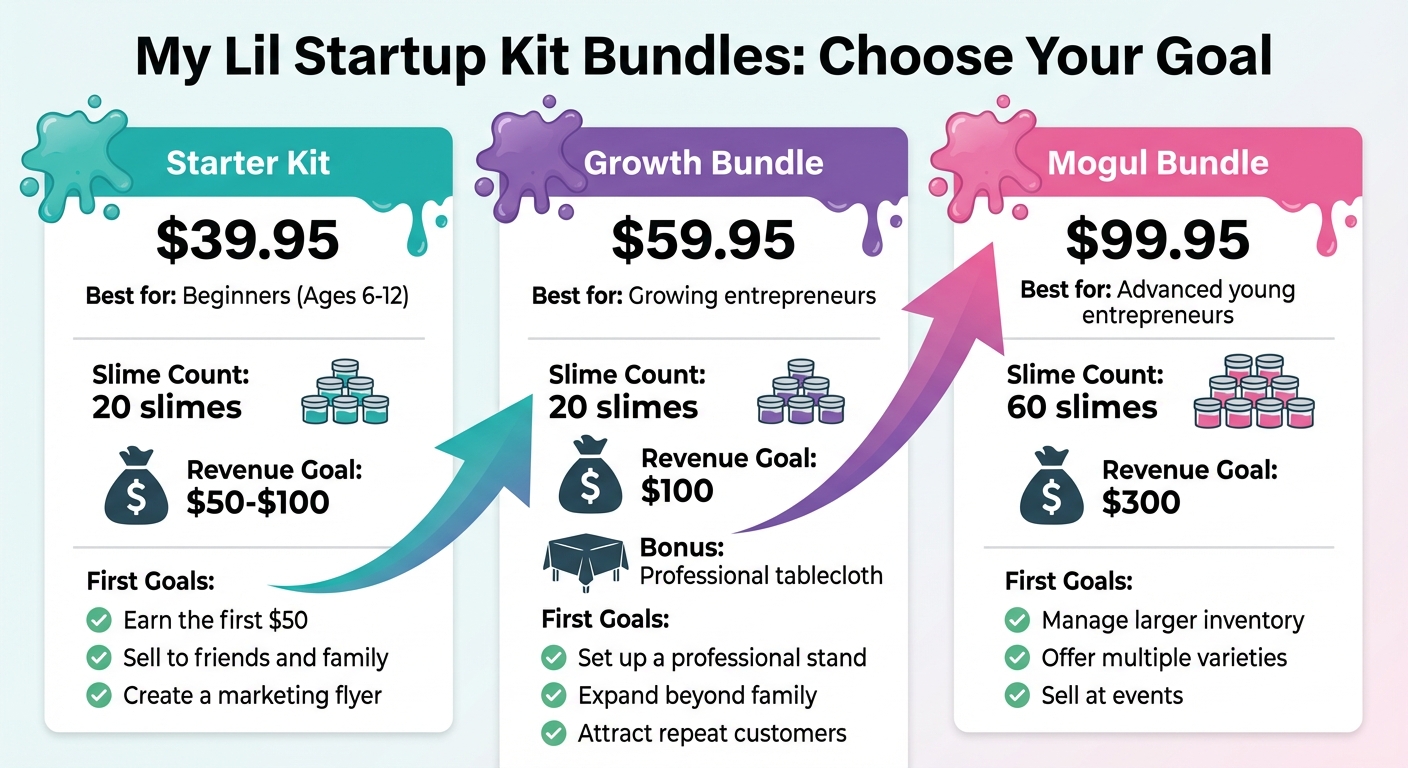
My Lil Startup Kit Bundles Comparison: Goals and Features for Young Entrepreneurs
This step focuses on turning aspirations into actionable goals using the My Lil Startup Slime Business Kit. The kit provides all the essentials for kids to launch their own slime business: 20 pre-made slimes, fun decorations like rainbow glitter, charms, beads, glow-in-the-dark powder, marketing flyers, thank you cards, a Success Instruction Book, and a Sales Tracker. The goal is simple and clear - sell each slime for $5 to earn $100. This straightforward target makes the idea of running a business both exciting and achievable.
But it’s not just about the money. Kids get to customize their slimes, distribute flyers, and deliver thank-you cards, all while building their customer base. Take Kaci’s son, for example. In September 2025, he used the kit's strategies to figure out what his customers wanted, designed slimes to match those preferences, and practiced skills like counting change and interacting with others.
The kit also includes a "Top Secret Envelope", which can only be opened after reaching $50 in sales. This adds an element of fun and reinforces the importance of setting and achieving milestones.
Goal Examples for Each Kit Bundle
Every kit bundle is designed to help kids set and achieve progressively bigger goals. Here's a breakdown of what each bundle offers:
- Starter Kit ($39.95): Ideal for beginners aged 6–12, this kit encourages kids to aim for $50–$100 in their first month. Goals might include selling slimes to friends and neighbors, creating their first marketing flyer, or completing their first sales.
- Growth Bundle ($59.95): This includes everything in the Starter Kit plus a multipurpose tablecloth for a professional-looking sales stand. At this level, kids can aim to sell at local events, attract repeat customers, and expand beyond family, working toward a $100 revenue goal.
- Mogul Bundle ($99.99): Designed for more advanced young entrepreneurs, this kit includes materials for 60 slimes, offering the potential to earn $300 in revenue. Goals here might involve managing a larger inventory, experimenting with new slime varieties, and reinvesting profits into additional supplies to keep the business thriving.
| Kit Bundle | Slime Count | Revenue Goal | First Goals |
|---|---|---|---|
| Starter Kit | 20 slimes | $100 | Earn the first $50, sell to friends and family, create a marketing flyer |
| Growth Bundle | 20 slimes | $100 | Set up a professional stand, expand beyond family, attract repeat customers |
| Mogul Bundle | 60 slimes | $300 | Manage inventory, offer multiple varieties, sell at events |
These tiered goals help kids develop valuable skills while hitting financial targets. Each bundle builds on the goal-setting and tracking methods introduced earlier.
Business Skills Kids Learn from My Lil Startup
Running a slime business with My Lil Startup helps kids gain practical entrepreneurial experience. They learn how to pitch their products, answer customer questions, and close sales, honing their communication and sales skills. Handling customer feedback, pricing concerns, and thank-you cards teaches them the importance of good customer service.
Money management becomes second nature as kids count change, track profits, and decide how to reinvest or save their earnings. The included Sales Tracker helps them record transactions and monitor progress toward their goals. On top of that, they develop an understanding of marketing and branding by customizing slimes and maintaining product quality to keep customers coming back.
"This is all about hands-on learning - whether it's mastering money management or nailing the perfect pitch." - Marcus Branford, Parent
"I could see his confidence boosting with each sale he made." - Meera Nair, Parent
These lessons go beyond the slime business, equipping kids with skills they can use in future ventures and everyday problem-solving.
Conclusion
Turning ideas into action is at the heart of business goal planning. It helps kids learn how to manage their time, tackle challenges as they arise, and break big ambitions into smaller, achievable steps. These skills not only build entrepreneurial know-how but also instill confidence that lasts a lifetime.
Kids learn best by doing. When they set a goal - like earning their first $100 - track their sales, and figure out how to bring back repeat customers, each step reinforces their belief in their abilities. Goal planning acts as a roadmap, guiding young entrepreneurs from brainstorming their ideas to successfully bringing them to life. This hands-on process strengthens both practical skills and business understanding.
The My Lil Startup Slime Business Kit makes the process even smoother by combining planning with hands-on practice. It includes everything kids need to get started, so they can focus on learning instead of worrying about missing supplies. With options for beginners and more advanced learners, the kit supports every stage of their entrepreneurial journey.
Parents have seen the impact firsthand, with many kids not only reaching their sales goals but also reinvesting their earnings to grow their businesses. As one satisfied customer, Jenn, put it:
"It's more than just fun - it's teaching them confidence, problem-solving, and that their ideas truly matter".
Starting small, celebrating each milestone, and watching their skills grow is where the magic happens. From setting that first goal to making their first sale, kids discover their potential - and what they’re truly capable of achieving.
FAQs
How do I help my child pick a business idea that will actually sell?
To guide your child in picking a business idea that has potential, start by focusing on their passions and hobbies. Talk to them about what they love doing - whether it’s drawing, crafting, building things, or lending a hand to others. Encourage brainstorming and testing out ideas to see if they’re both enjoyable and easy to manage alongside their daily routine. Starting with something simple, like selling slime kits from My Lil Startup, can make the journey fun and less overwhelming.
What’s a good first SMART goal for a kid’s small business?
A fantastic starting SMART goal for a kid's small business might be to sell 20 units of a product, such as slime, and generate $100 in revenue. This goal is specific (selling 20 items), measurable (earning $100), attainable for someone just starting out, relevant to their business, and time-bound (for instance, within a few weeks). It’s a great way to boost confidence while teaching essential skills like sales, pricing, and setting achievable goals.
What should kids do if they’re not meeting their sales goal?
Kids who find themselves falling short of their sales goals should take a moment to assess their progress and rethink their strategies. By figuring out what’s working and pinpointing areas that need improvement - whether it’s marketing efforts or the quality of their product - they can make meaningful changes. Setting clear, manageable goals can also help them stay motivated. Adjusting their plans and being open to change allows them to turn challenges into learning opportunities while keeping their eyes on their business goals.